
What sweeping does — and doesn't
A sweeper handles loose material: grit, sand, leaves, litter, packaging, pallet splinters, fine dust. A main broom throws that material forward or up into a hopper while side brushes pull in the edges, and a filter system traps the fines so they don't blow straight back out.
A sweeper will not remove anything bonded to the surface. Tyre rubber, oil film, spilled sugar syrup, dried render — none of that lifts with a brush. That is a scrubbing or pressure-cleaning problem, and any contractor who tells you a sweep will fix a grey, greasy floor is selling you a pass that won't change the colour of it.
Used properly, though, sweeping is what makes everything else cheaper: less grit means less abrasion on the slab, fewer pads consumed when you scrub, less dust in racking and stock, and fewer complaints.
Four machine classes, four jobs
Sweep path width sets how fast a job goes; access sets whether the machine can do it at all. Most real sites need two classes working together — a big machine for the open run, a small one for the edges.
| Machine | Suits | Watch for |
|---|---|---|
| Truck sweeper | Roads, estate streets, open hardstand, large surface car parks. | Height limits and ramp grades — it won't go into a basement. |
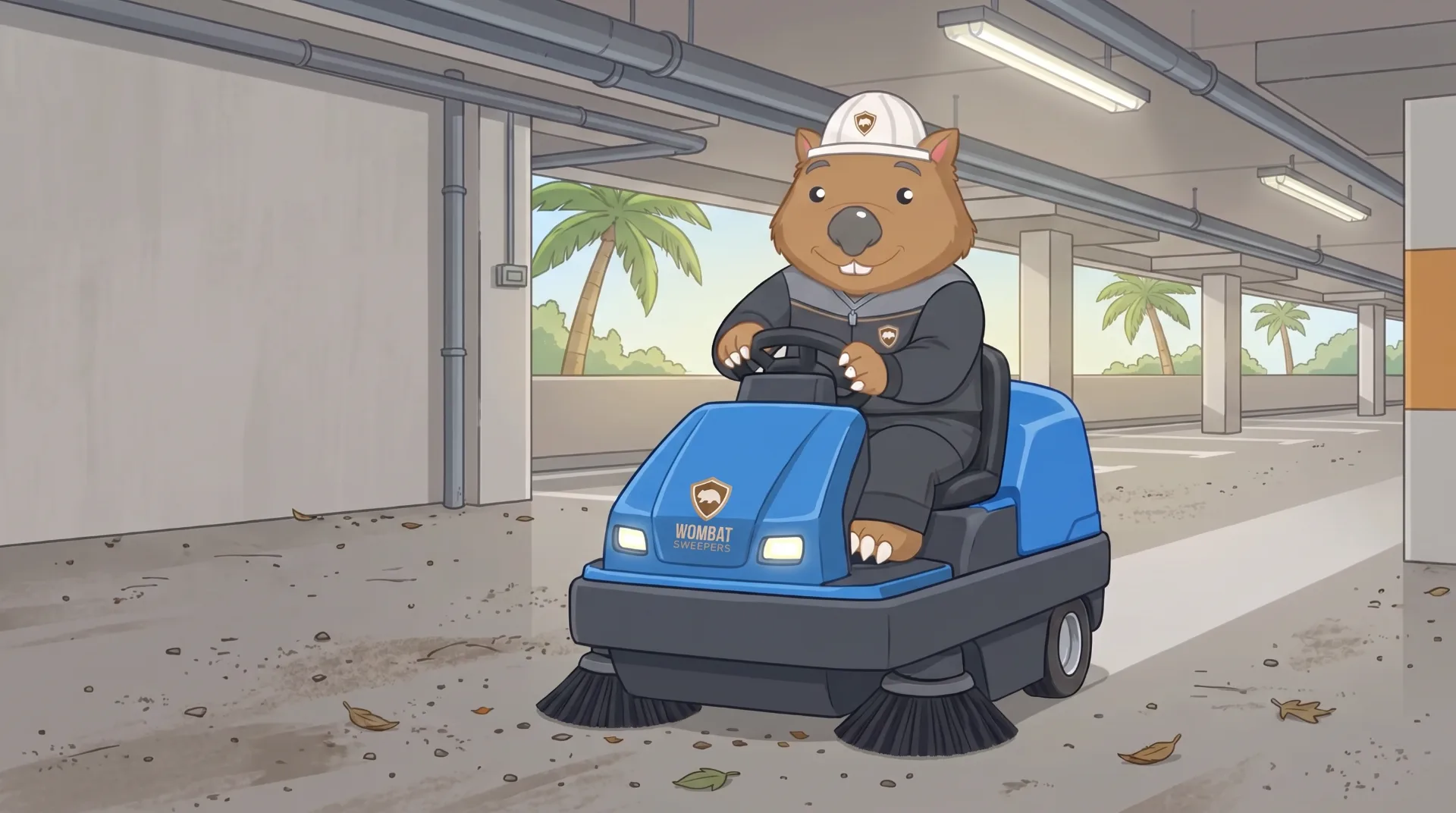
| Ride-on | Multi-level car parks, warehouses, factory floors, exhibition halls. | Turning circle in tight bays; needs a clear run to be efficient. |
| Walk-behind | Racking aisles, loading docks, back-of-house, smaller tenancies. | Slower per square metre — costly on very large areas. |
| Handheld / blower | Corners, stairs, garden edges, under racking, bin bays. | Detail only — confirm it's included in the scope, not extra. |
Dust control is the whole game
The difference between a sweeper that cleans and a sweeper that redistributes is filtration. Panel and pocket filters hold the fine fraction that a brush kicks up; when they're blinded or torn, the machine blows a grey plume out the back and you'll find it on stock, cars and window sills the next morning.
Outdoors, water-based suppression at the brush heads does the same job. Indoors — warehouses, food and pharma facilities, hospitals, schools — filtration matters more, because there's nowhere for airborne dust to go except onto product and into people.
It's a fair question to ask a contractor: when were the filters last shaken out or replaced? If they can't answer, expect dust.
Sweep first. Always.
Scrubbing an unswept floor is the single most common waste of money we see. Water plus loose grit makes slurry, slurry clogs the recovery system, grit shreds pads and brushes, and the squeegee smears a thin film of mud back across the slab. You pay for a scrub and get a worse-looking floor.
The right sequence on any hard floor is sweep, then scrub, then detail the edges and corners by hand. On a construction hand-over add a pressure clean of the entries and paving at the end, once the internal floor work is finished — not before, or you'll walk the mess straight back in. The scrubbing guide covers the second step in detail.
How often for your site type
Sweeping FAQ
Can you sweep a basement car park?
Yes — that's ride-on territory. Give us the clearance height and the ramp grade and we'll match the machine to it. Truck sweepers stay upstairs.
Do you work overnight?
Most of our retail, warehouse and venue sweeping is done after hours or overnight, because an empty floor is swept properly and a full one isn't.
Is sweeping enough on its own?
For debris and dust, yes. If the floor is discoloured rather than dirty, you need a scrub — and you'll want the sweep done first anyway.
Can we hire a machine and sweep it ourselves?
Yes. Daily, weekly or long-term hire with delivery, set-up and operator instruction. It stacks up when you've got a regular need and someone reliable to run it.
What do you need from us to quote?
Approximate area, the surface, access restrictions (height, gates, keys, inductions), when we can be on site, and how often you want it. A site plan or a few photos speeds it up.