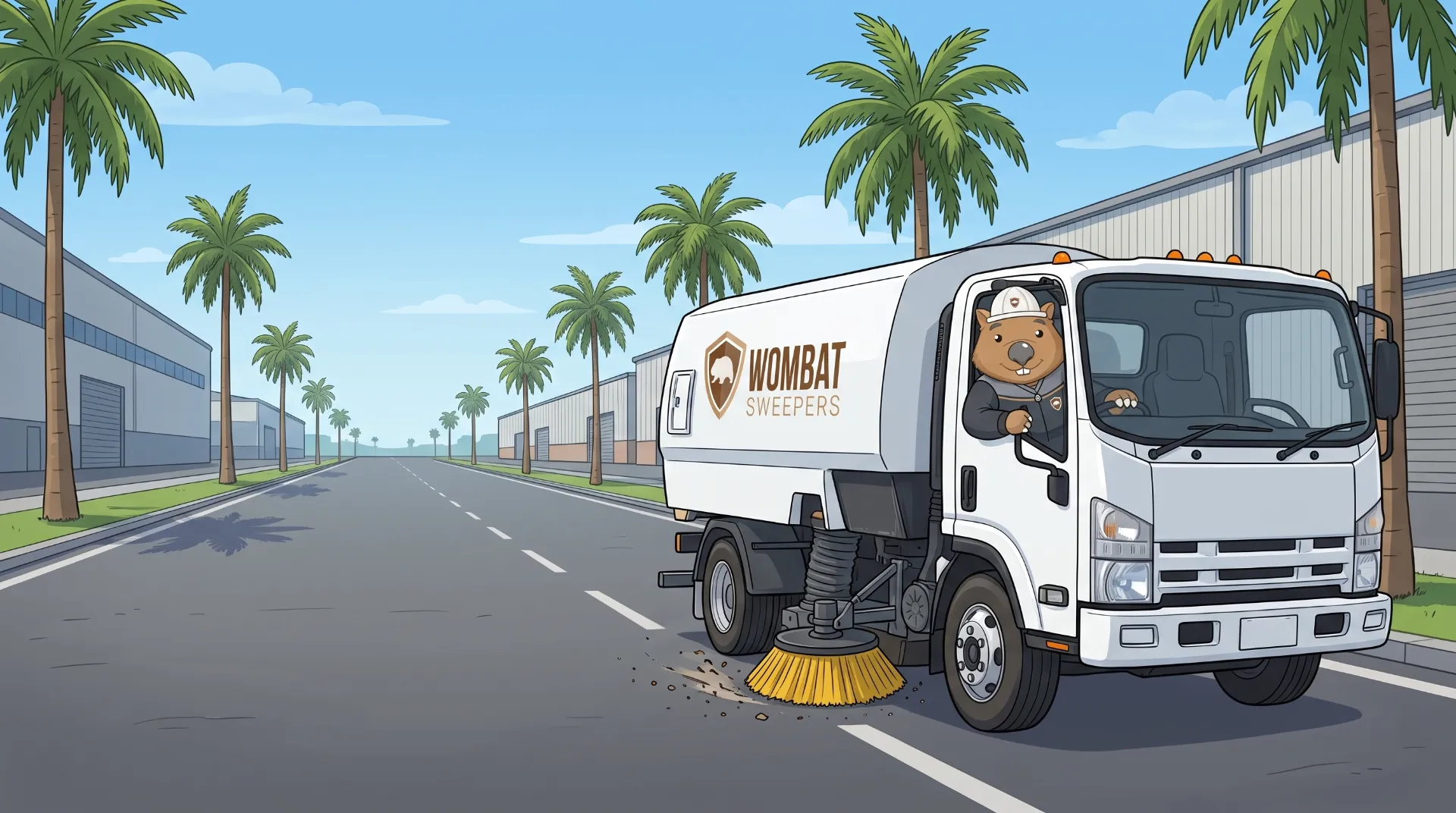
What the service covers
Scope is set at the site walk, so you are quoted for what is actually there rather than a template.
Machines we use
The machine is matched to the surface and the clearance — sending the wrong one wastes everybody’s morning.
Regenerative-air sweepers
Fine sediment across a full lane width, air recirculated in a closed loop.
Mechanical broom
Heavy bulk — gravel, spoil and road base on a rough surface.
Vacuum sweepers
Kerb and channel work, leaves, litter and wet material.
How the job runs
Four steps, every time, whether it is a one-off or a five-year contract.
Scope the run
Length, surface, what is being tracked on, and where the machine can safely tip.
Traffic management
We work to your TMP, or arrange the control the job actually needs.
Sweep and capture
Water sprays at the brush heads keep dust down — a dry sweep just relocates it into the air.
Tip and record
Captured material goes to a facility that accepts it, with a record if your ESCP requires one.
Road & street sweeping — common questions
Something else? Call 1300 387 713 and talk to someone who runs the machines.
How often should a road be swept?
Active construction accesses often need daily or every-second-day sweeping. Industrial estates suit monthly, completed residential streets quarterly, and treed streets get an extra run before storm season.
Do I need street sweeping for compliance?
If your site tracks mud or sediment onto a public road you have a duty to clean it up and to keep sediment out of the stormwater system. Sweeping is the standard control, and councils commonly require it as an approval condition.
Can a street sweeper clean a car park?
Open surface car parks and hardstand, yes. Multi-level and basement car parks need a ride-on sweeper instead, because of height limits and turning circles.
Is sweeping any use after rain?
Damp is fine, saturated mud is not. Wet clay smears rather than lifts and blinds the filters, so we would rather re-book than charge you for moving mud around.