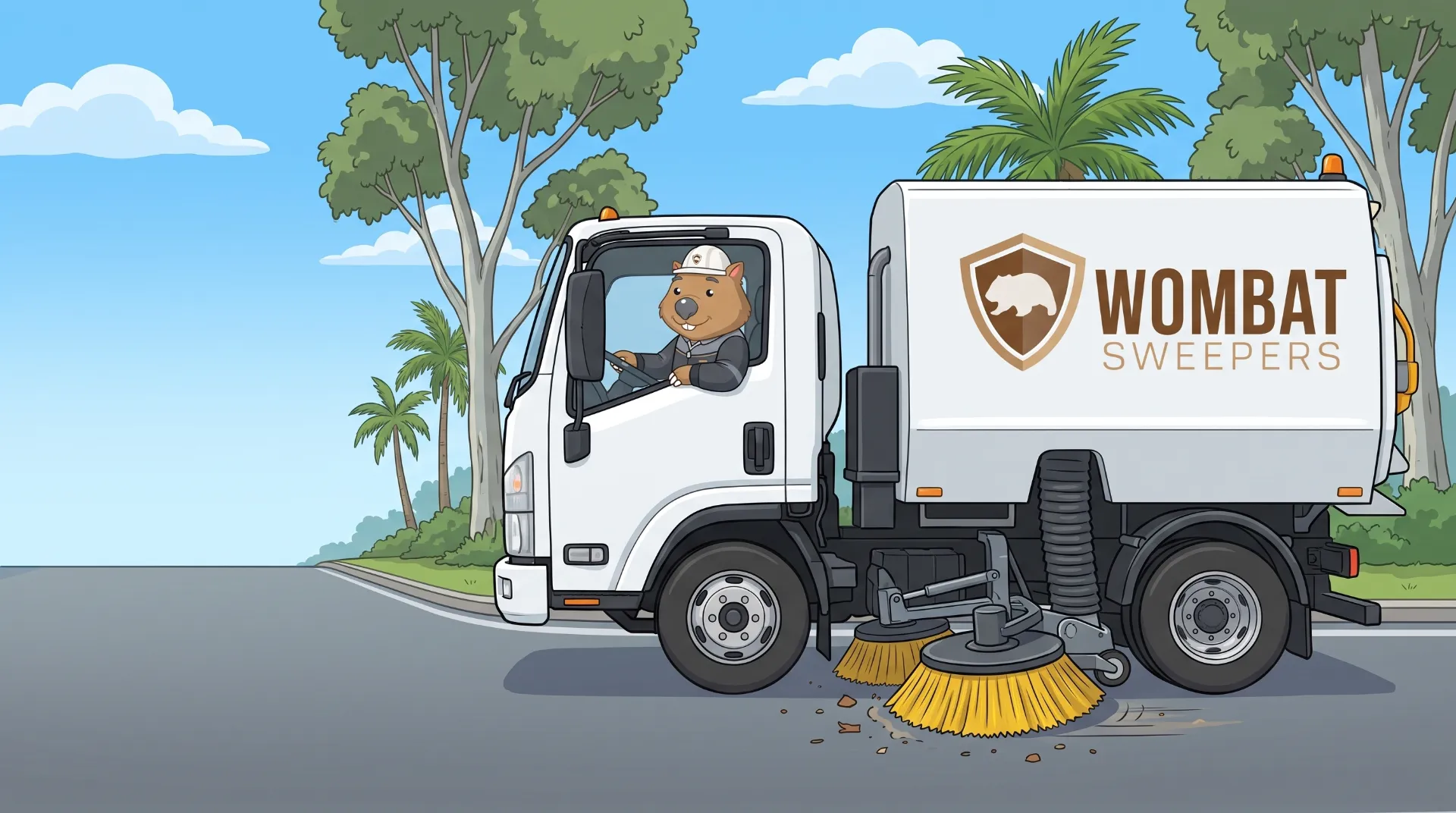
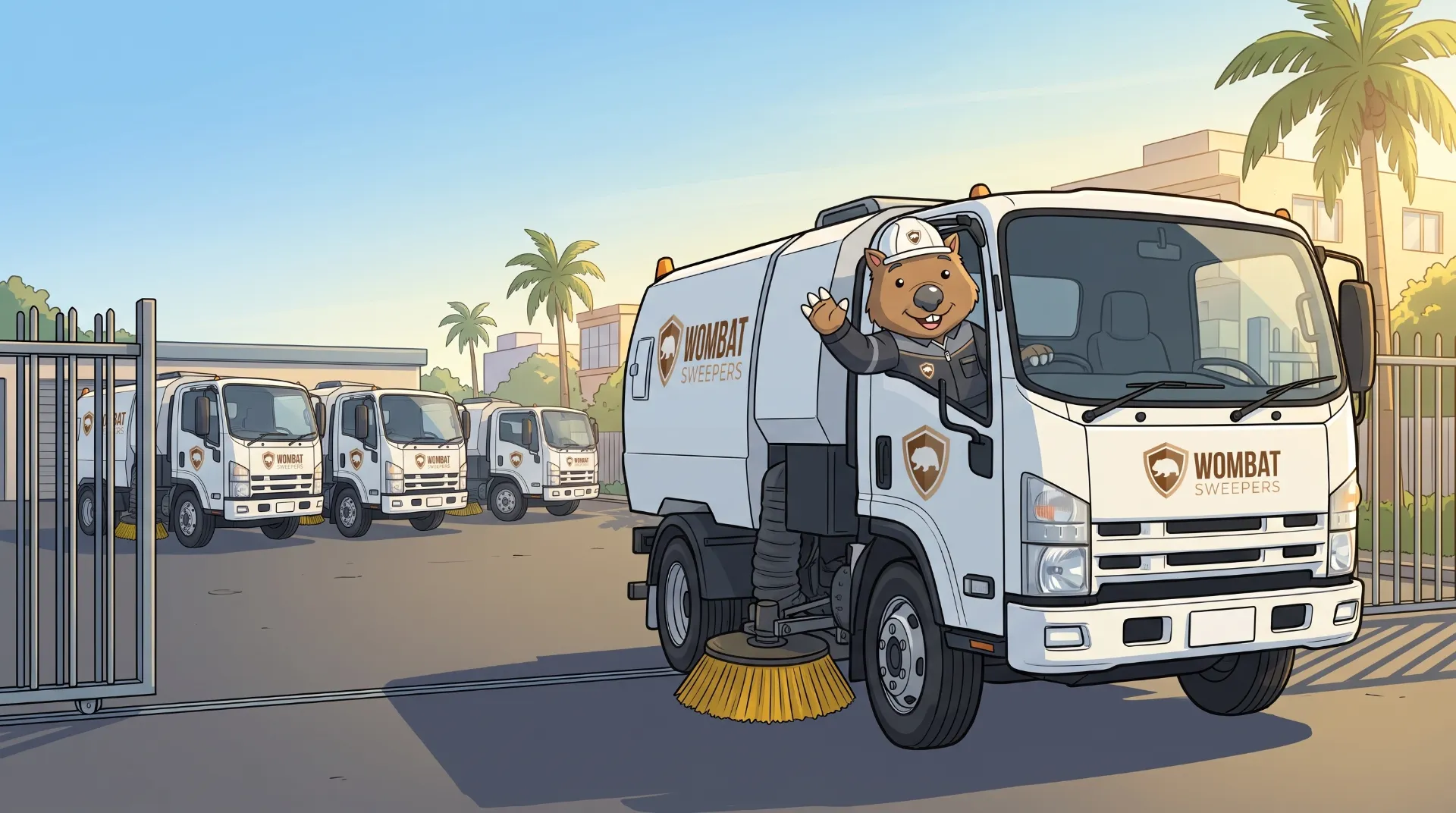
- Gutter broom
- A vertical-axis side brush on a sweeper that pulls material out of the kerb line and channel into the machine’s collection path. Without it, a sweeper only cleans the traffic lane.
- Main broom
- The horizontal cylindrical brush that moves material from the collection path into the hopper.
- Regenerative air
- A sweeping system that blasts air at the surface and recovers it in a closed loop rather than exhausting it. Best-in-class for fine sediment across a full lane width.
- Mechanical broom sweeper
- A sweeper that lifts material by brush and conveyor. Strong on heavy bulk like gravel and spoil, weak on fine dust.
- Vacuum sweeper
- A suction sweeper with a narrow collection path. Good for kerb and channel work, leaves, litter and wet material.
- Hopper
- The onboard container that holds captured material. Hopper capacity and the number of tips a job needs are direct cost drivers.
- Hopper tip
- One discharge of the hopper at a disposal point. A job that fills the hopper three times costs more than the same area with one tip.
- Windrow
- A line of material left behind where an operator stopped sweeping. A windrow at the end of a run is a sign the job was not finished properly.
- Gully pit
- The stormwater inlet at the kerb line. Grates should be left clear after sweeping, not capped with a pile of what came off the road.
- Kerb and channel
- The gutter line and the concrete channel beside it. Sweeping into the corner of the channel is what separates a real street sweep from a lane pass.
- Dust suppression
- Water sprays at the brush heads that hold fine material down during sweeping. Without it a sweeper relocates dust into the air.
- Panel and pocket filters
- Filtration stages on a sweeper that trap fine particles instead of exhausting them. The specification that matters most on dusty sites.
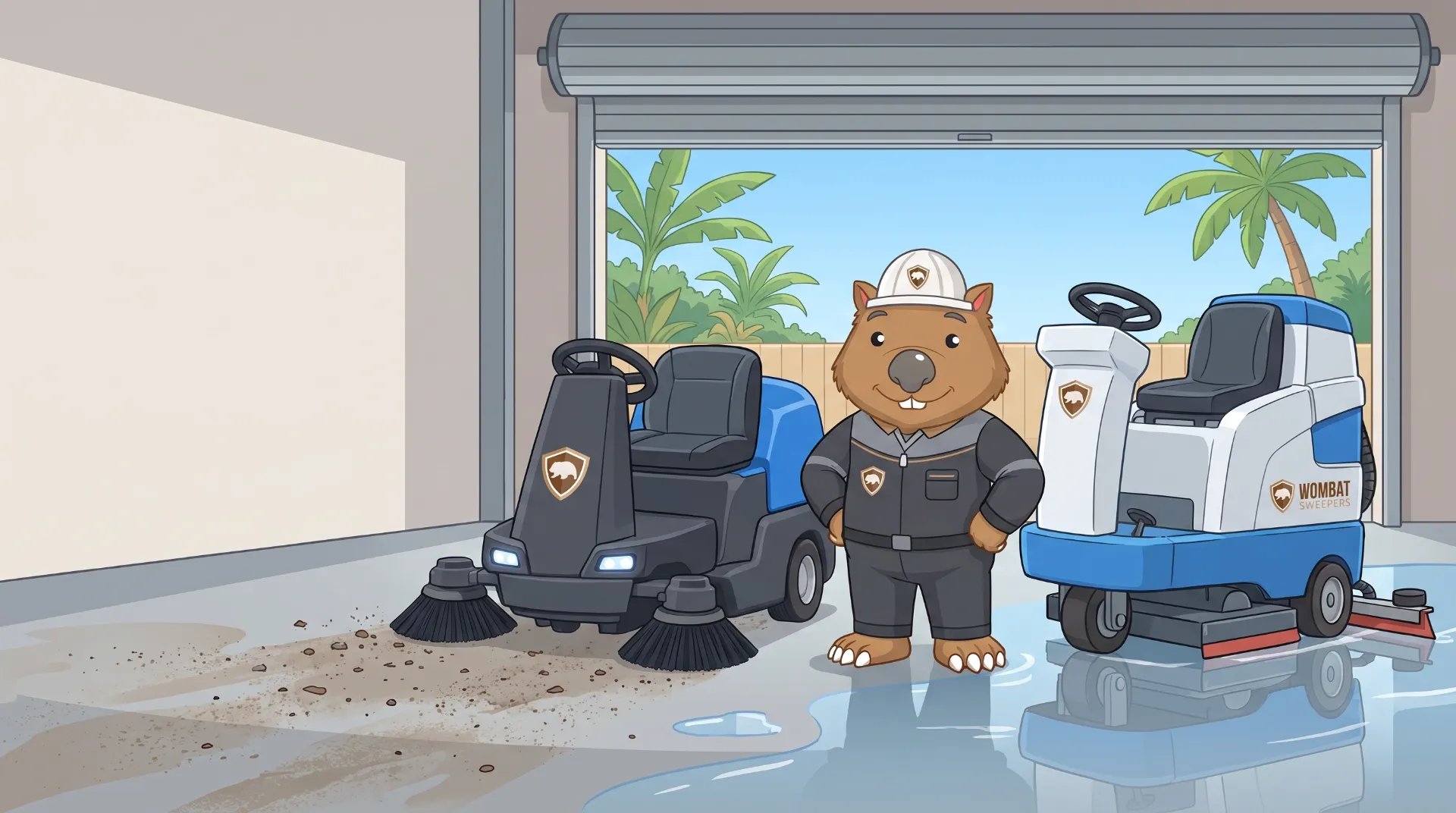
- Scrubber
- A machine that applies water and detergent, agitates the surface with a pad or brush, and vacuums the slurry back up. The only class that removes material bonded to concrete.
- Squeegee
- The rubber blade behind a scrubber that collects slurry for the vacuum to recover. A worn squeegee leaves a wet floor.
- Recovery tank
- The tank a scrubber vacuums dirty solution into. If a machine does not recover its water, it is a mop with an engine.
- Pad grade
- The aggressiveness of a scrubber pad. Too aggressive dulls a sealed or polished floor; too mild achieves nothing on heavy rubber.
- Pre-sweep
- Sweeping a floor before scrubbing it. Scrubbing over loose grit turns it into slurry and drags it around the slab.
- Rotary surface cleaner
- A pressure-cleaning attachment with rotating jets under a shroud. Gives even coverage on flat concrete with no wand marks or zebra striping.
- Wet hire
- Hiring a machine with an operator supplied. Truck-mounted road sweepers are always wet hire — they are heavy vehicles.
- Dry hire
- Hiring the machine only, for your own inducted operator to run. Standard for ride-on and walk-behind sweepers and scrubbers.
- Hardstand
- A sealed external area used for parking, storage or truck movements. Usually concrete or asphalt, and the most common thing we sweep.
- ESCP
- Erosion and Sediment Control Plan. The document on a Queensland civil or construction site that sets out how sediment is kept out of the stormwater system — sweeping is usually one of the named controls.
- Practical completion clean
- The hand-over clean at the end of a construction project: sweep down, then scrub to remove the grey construction film a sweeper leaves behind.
- Bump-out
- The dismantling of an exhibition or event build. The cleaning window sits between bump-out and the next bump-in, and it is rarely generous.