
What we clean on these sites
Every quote starts with a walk of the site, so the scope matches what is actually there rather than a template. On construction & civil work, these are the areas that usually make the list.
The machines we bring
Sending the wrong machine wastes everybody's morning. Here is what normally rolls off the truck for this kind of site.
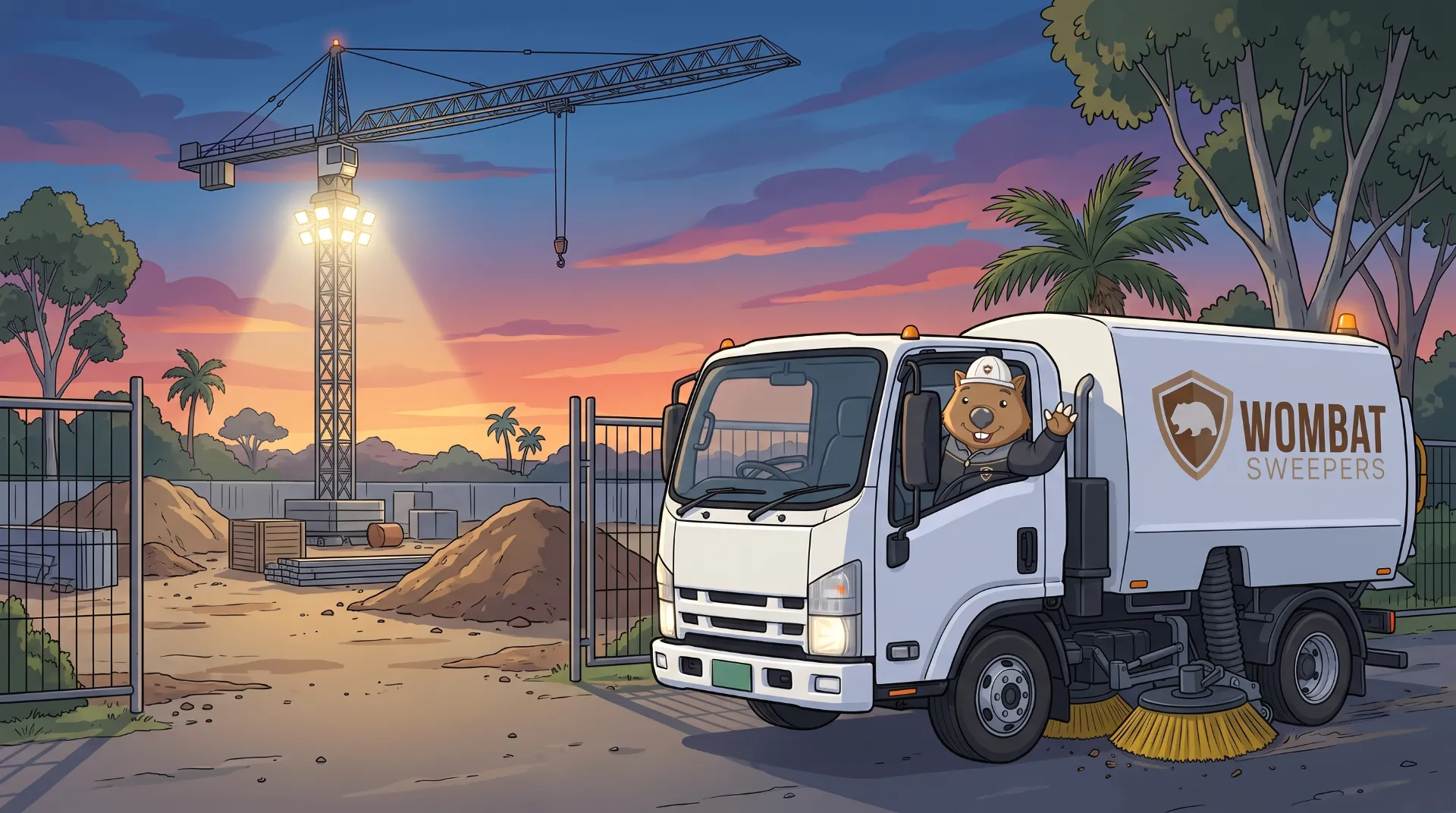
Regenerative-air street sweeper
Fine sediment across a full lane width — the right machine for mud tracked onto a sealed road.
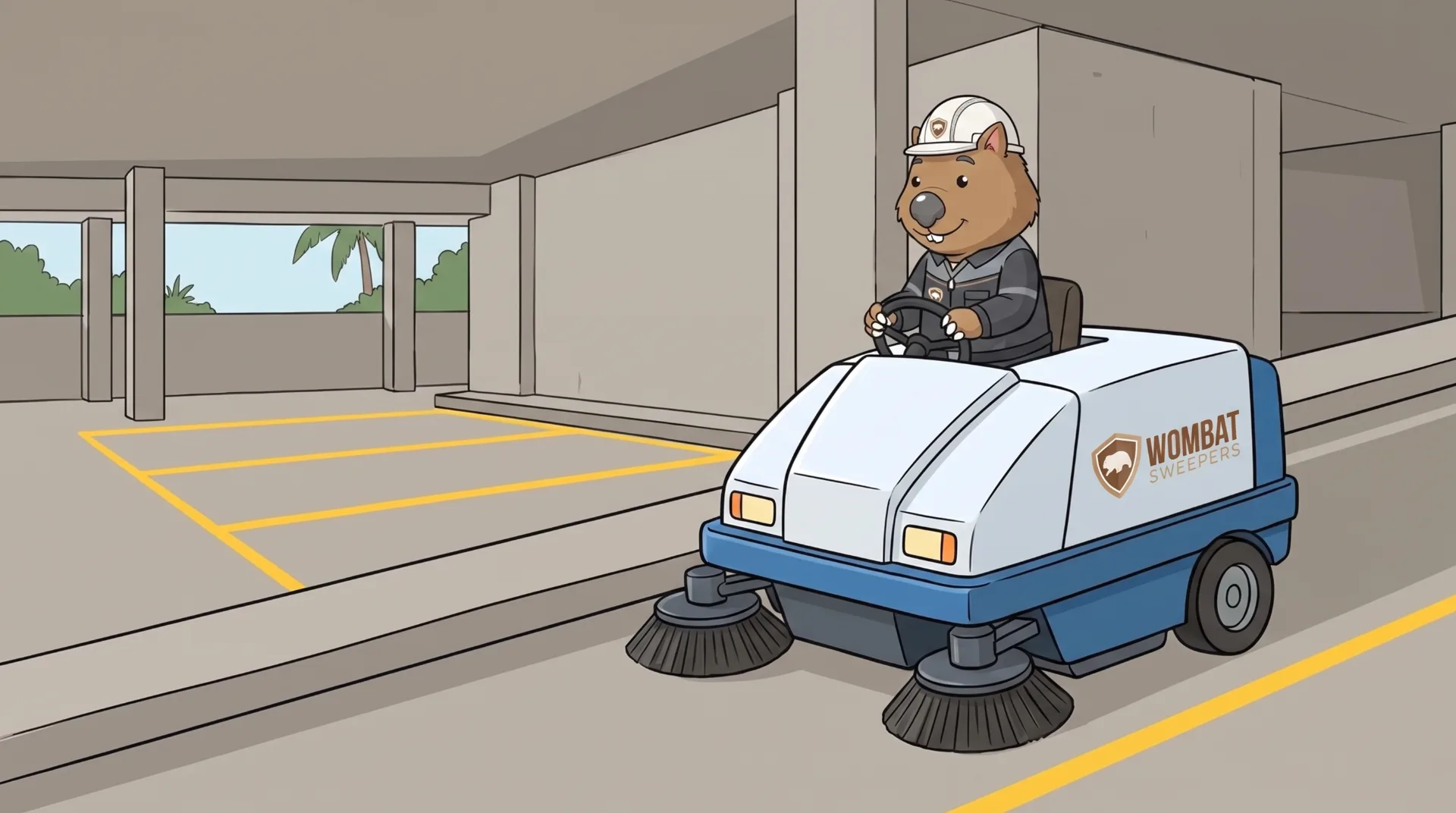
Ride-on sweeper
Hardstand, laydown areas and basements where a truck cannot turn.
Ride-on scrubber
Practical-completion cleans: lifts the grey film a sweeper leaves behind.
What goes wrong without it
A directive with a deadline
Sediment on the public road gets photographed — by a resident, a council officer or the principal contractor. Scheduled sweeping costs less than a clean-up order.
Sediment in the stormwater
Grit washes into the network and out into creeks. Sweeping is the standard control named in most erosion and sediment control plans.
Grit as ball bearings
Loose material on a seal is a genuine skid risk at roundabouts, corners and crossings — and it accelerates wear on the surface.


A schedule that actually holds
Frequency is driven by how fast material arrives on the surface, not by the calendar. These are the cycles we see work in practice.
Construction & civil — common questions
Something else? Call 1300 387 713 and talk to someone who runs the machines.
Can you work inside our traffic management plan?
Yes. We work to your TMP, and our operators are inducted before they start. If the job needs a spotter or a lane closure, tell us at quote stage and we will price it in.
How soon can you get a sweeper to site?
Usually within a day or two across South East Queensland, and same-day for urgent civil work when a machine is already out that way.
Do you sweep unsealed roads?
No — there is nothing to lift off gravel except the gravel. Sweeping starts where the seal starts, which is normally your site exit.
What happens to the spoil?
It is captured in the hopper and disposed of at a facility that accepts it. We can tell you where it went if your ESCP requires a record.