How a scrubber machine works
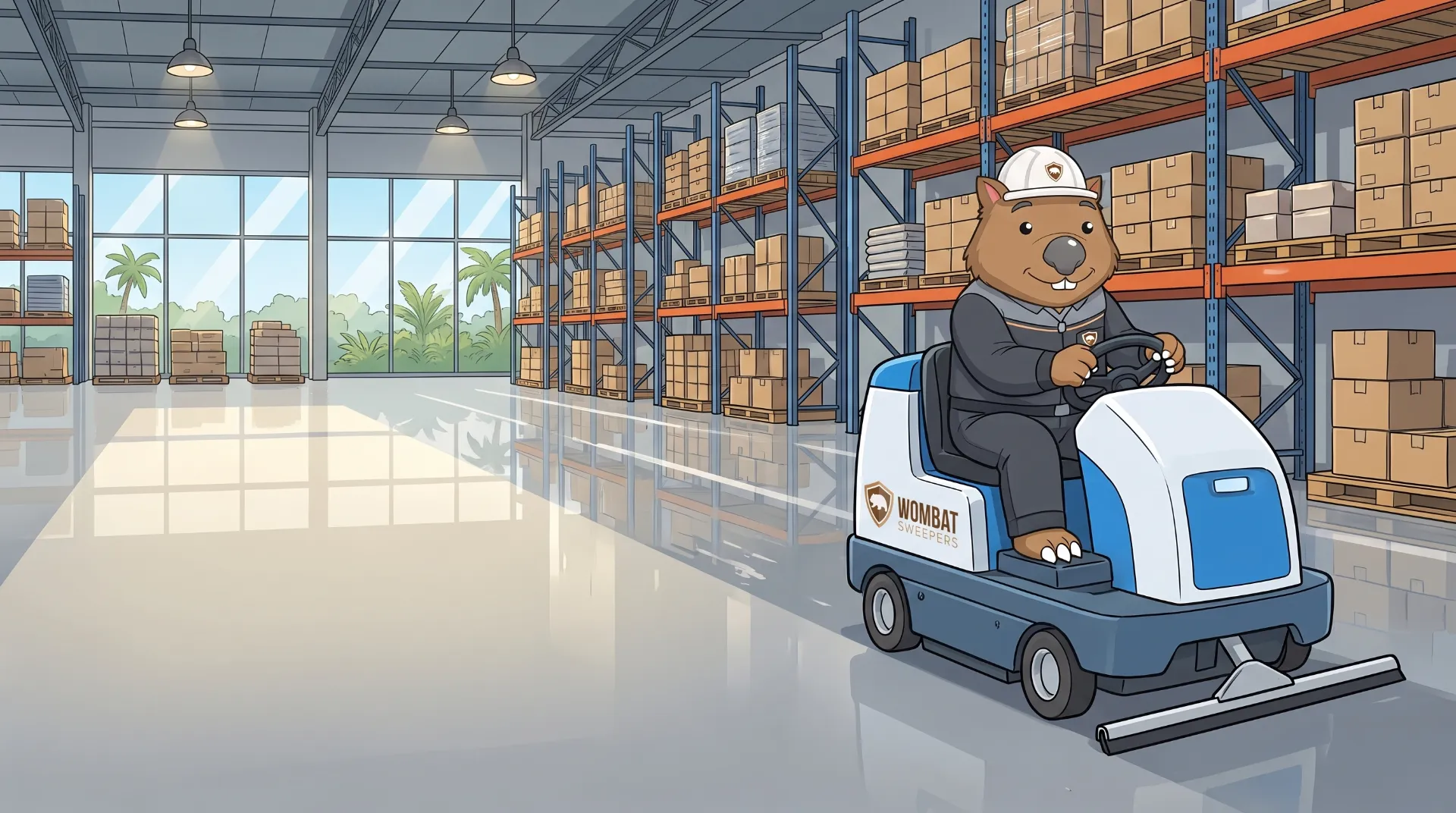
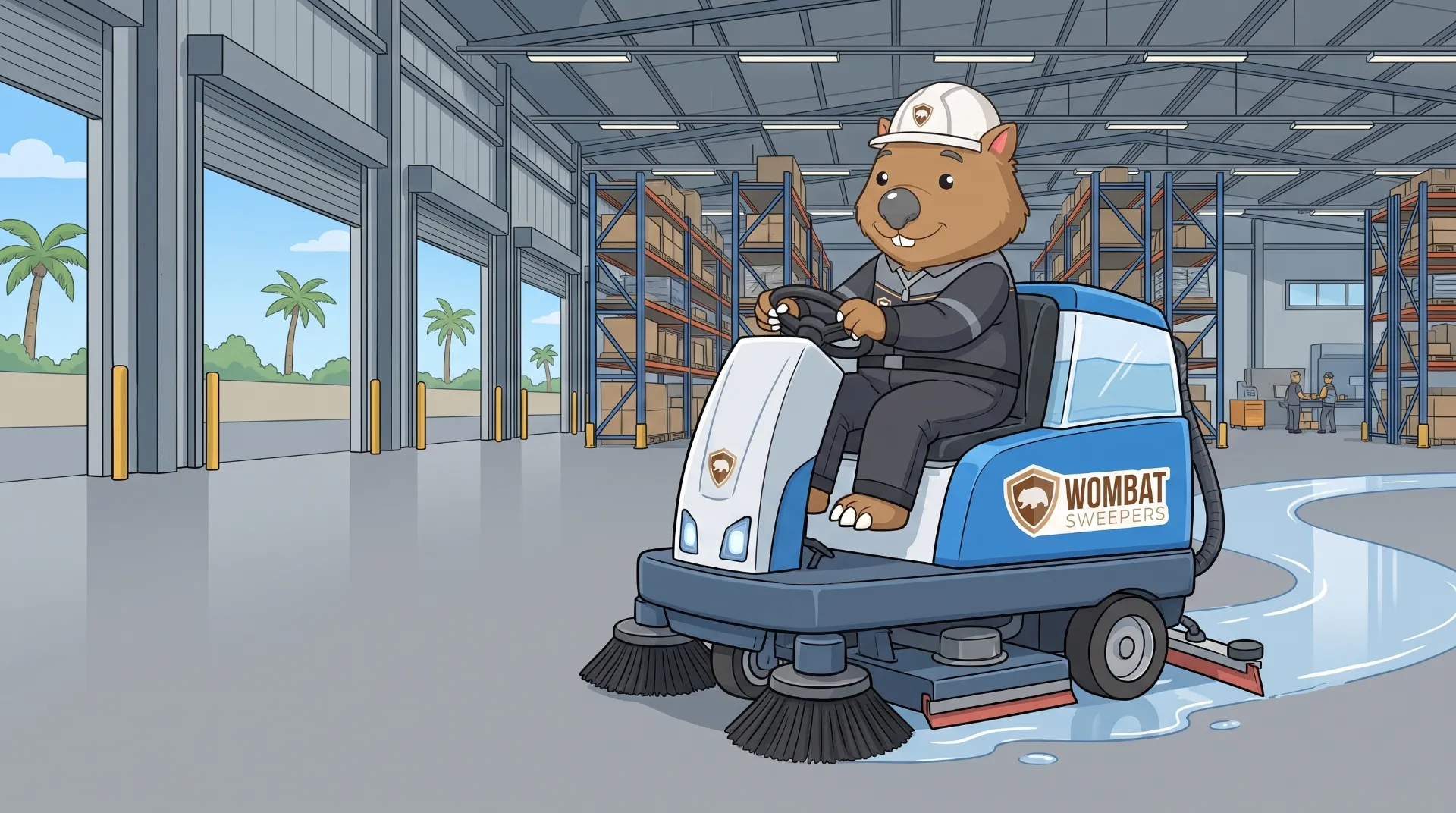
Four stages in a single pass. Solution goes down through a metered feed. A rotating disc or cylindrical brush agitates the surface and breaks the bond between the soil and the concrete. A squeegee collects the resulting slurry. A vacuum lifts it into a recovery tank. The floor behind the machine is damp rather than wet, and walkable within minutes.
Ride-on versus walk-behind
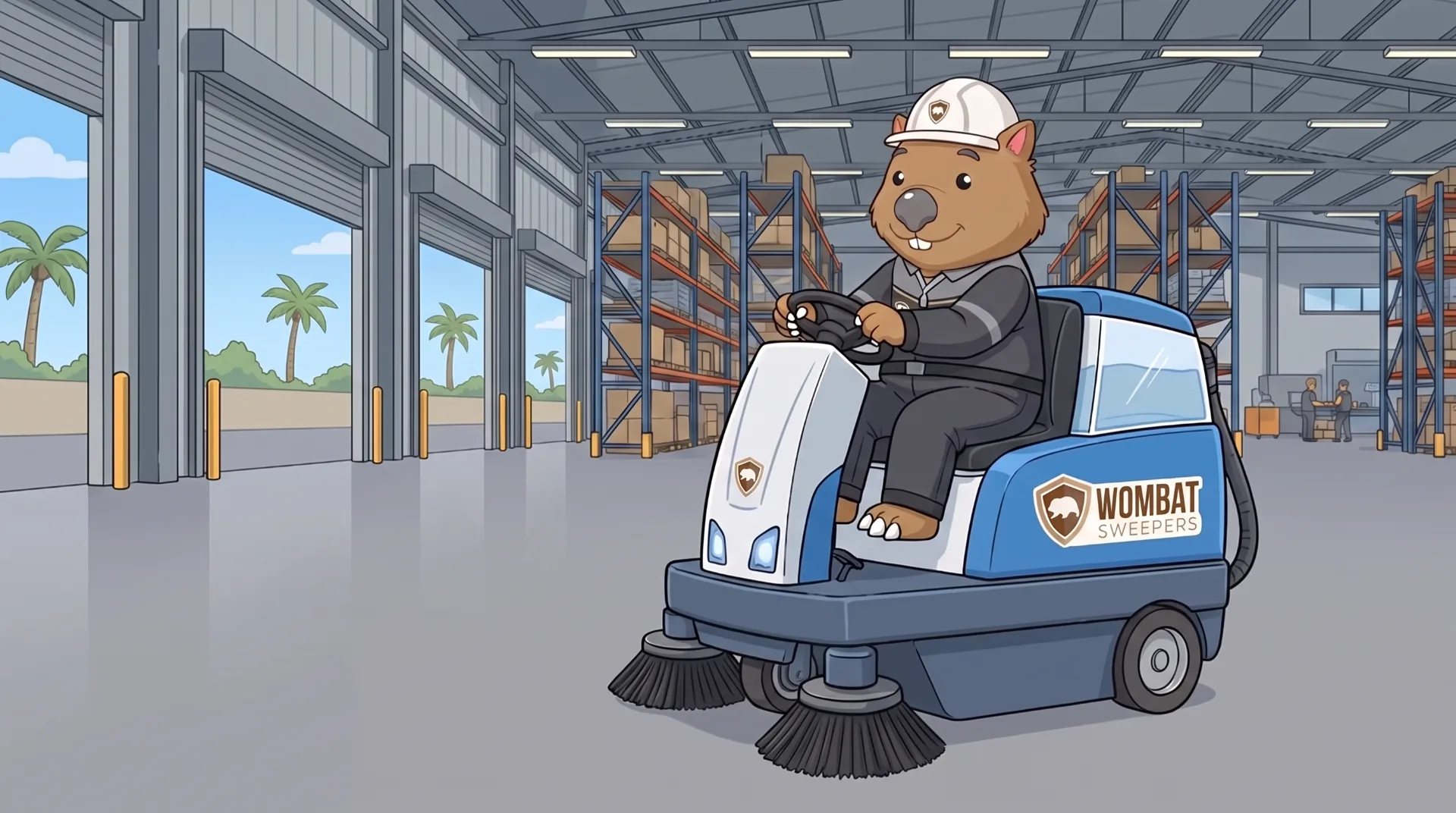
Ride-on scrubbers cover large slabs and car park decks quickly, with bigger solution and recovery tanks so there are fewer stops to fill and dump. Walk-behind scrubbers are the answer for racking aisles, ramps, corridors, bays and anywhere a ride-on cannot turn. Most warehouses genuinely need both, and on a contract we bring both.
Pads, brushes and chemistry
The pad or brush does the mechanical work; the detergent does the chemical work. Aggressive pads on a sealed or polished floor will dull it, and mild pads on heavy rubber achieve nothing — so the pairing gets chosen for your floor, not for the machine. On food, pharma and clean facilities the chemistry also has to suit the environment, which narrows the options further.
Water recovery matters
A scrubber that does not recover its water is a mop with an engine: the dirty solution stays on the floor and dries back into it. Proper recovery is what makes the result last and what keeps the dirty water out of your stormwater. It is also what lets us work through a live facility without closing it — the floor is walkable close behind the machine.
Sweep first, then scrub
Order is not optional. Scrubbing over loose grit turns it into slurry and drags it across the floor, and it wears the pads out fast. Every properly run scrub starts with a sweep, which is why a scrubber alone is rarely the whole answer on a dirty slab.
At a glance
| Machine class | Best for | Why | Trade-off |
|---|---|---|---|
| Ride-on scrubber | Large slabs and car park decks | Big solution and recovery tanks, fewer stops | Needs turning room |
| Walk-behind scrubber | Aisles, ramps, corridors, bays | Fits where a ride-on cannot | More operator hours per square metre |
| Combination sweep/scrub | Moderately soiled slabs | One pass, two jobs | A dedicated pre-sweep still wins on dirty floors |
| Pre-sweep machine | Any floor before scrubbing | Stops grit becoming slurry | Not a cleaning step on its own |
Scrubber hire by location
Standard service across Brisbane, the Gold Coast, Logan, Ipswich and the Redlands with no travel loading. Elsewhere in Queensland, travel is quoted as its own line.
Scrubber machines explained — questions
Something else? Call 1300 387 713 and talk to someone who runs the machines.
What does a scrubber machine remove?
Anything bonded to the surface — forklift rubber, oil and hydraulic film, ingrained dust, tyre marks, spills and traffic film. It is the only machine class that changes how a concrete slab actually looks.
Is a floor scrubber better than a sweeper?
Neither is better; they do different jobs. A sweeper collects loose material across a large area. A scrubber removes what is stuck to the surface. A warehouse typically needs sweeping on a cycle and scrubbing periodically on top.
Will a scrubber damage a sealed or polished floor?
Not with the right pad. Damage comes from using an aggressive pad on a coated or polished surface, which is why the pad and chemistry get matched to the floor before the machine starts.
Where does the dirty water go?
Into the machine's recovery tank, then to an appropriate disposal point. It does not go into your stormwater drain.