How a sweeper machine works
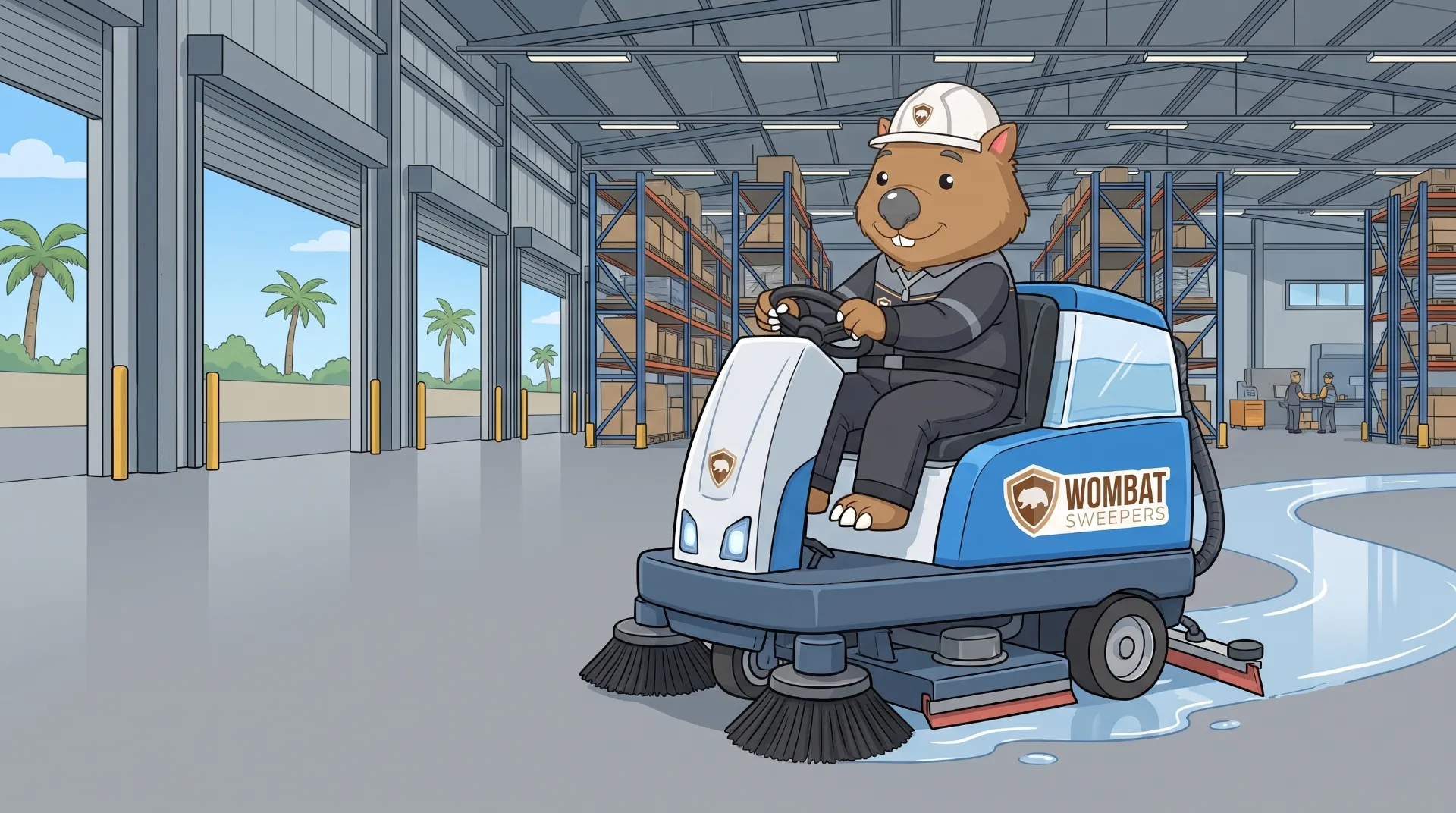
Three things happen in sequence. A side brush or gutter broom pulls material out of corners and kerb lines into the machine's path. A main cylindrical brush throws or flicks that material toward the collection point. Then either mechanical lift or air moves it into the hopper. Water sprays or filters hold the dust down while all that happens — without them, a sweeper simply relocates fine material into the air.
The four machine classes
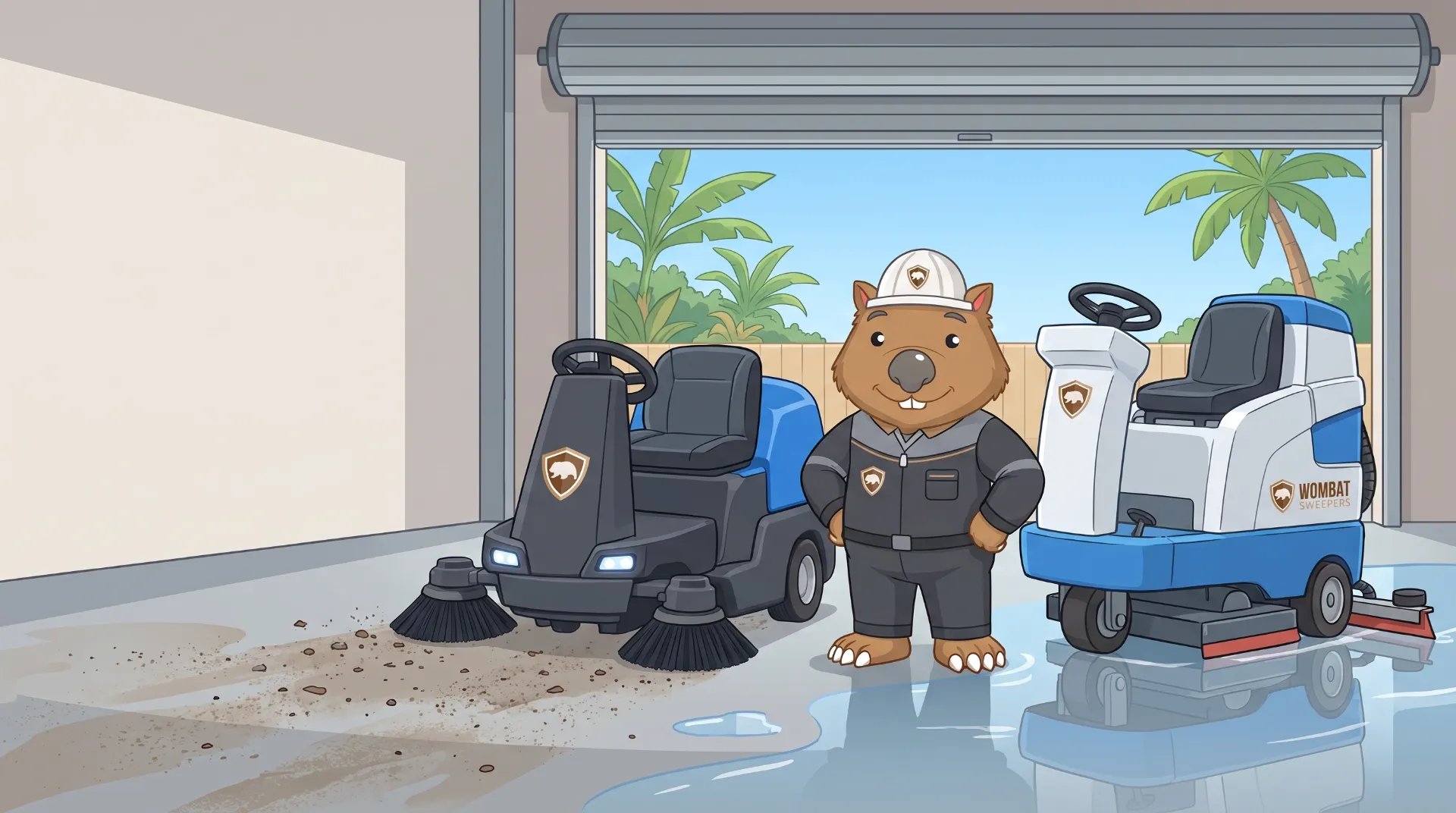
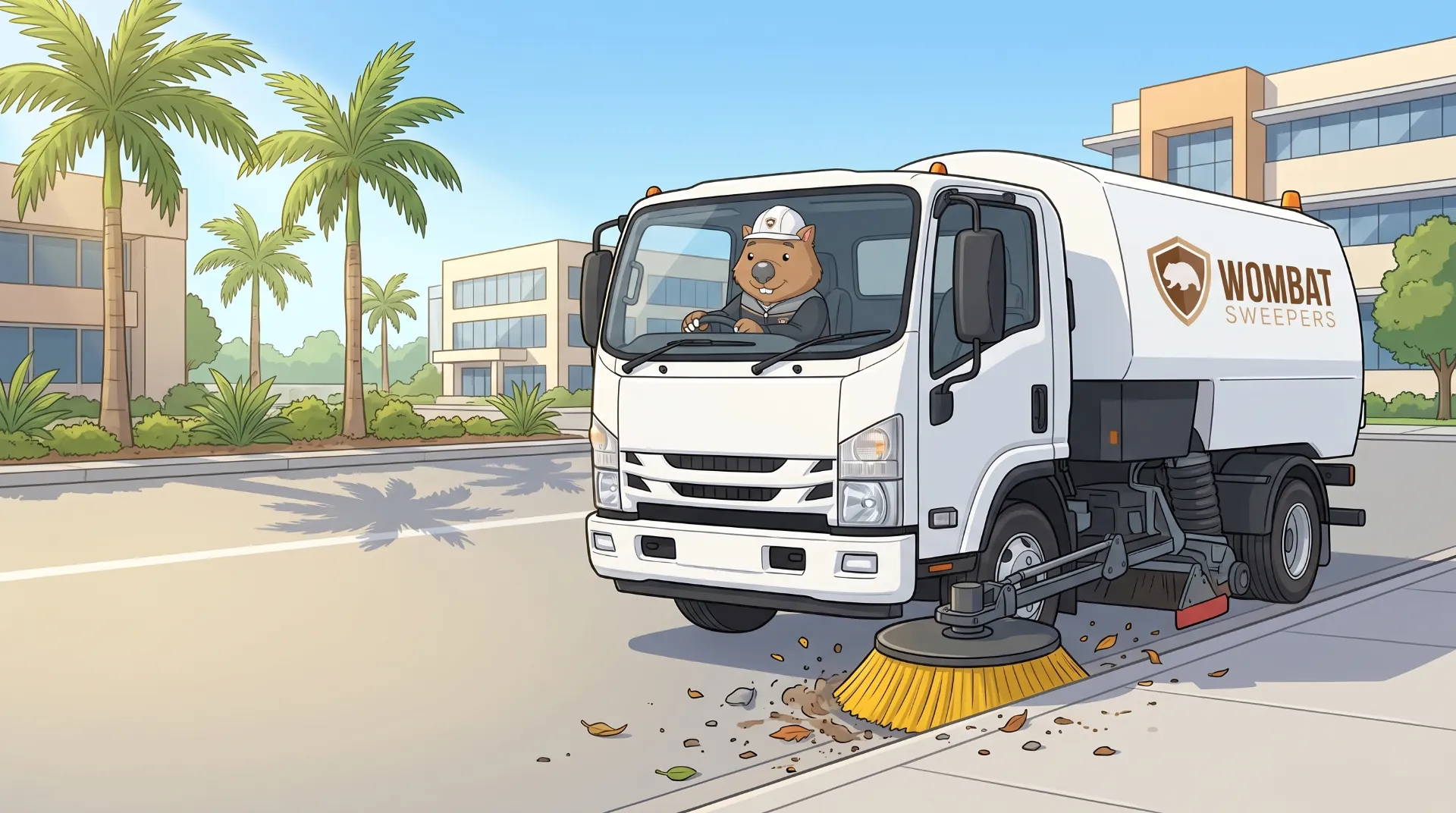
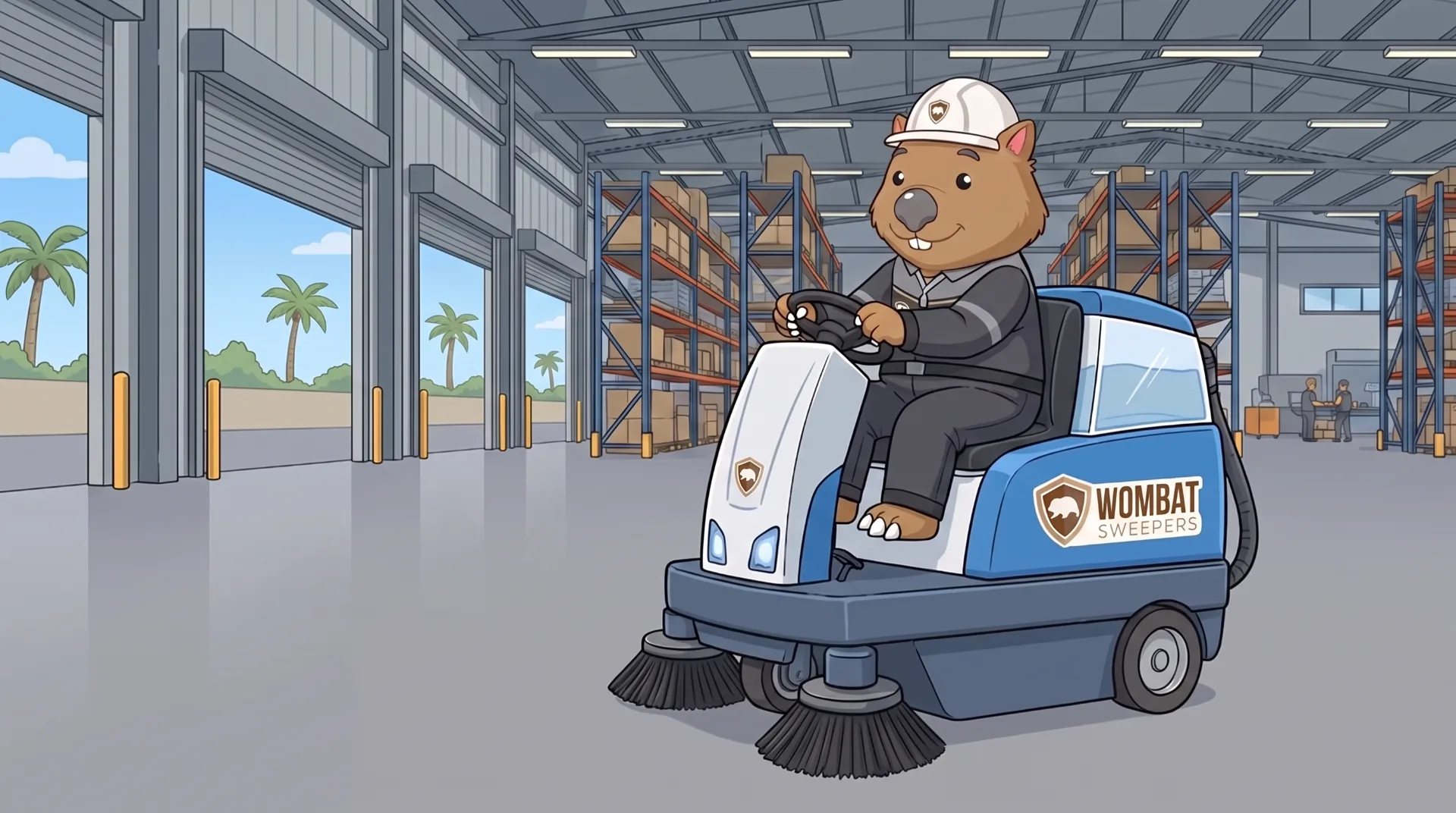
Ride-on sweepers cover large areas fast: car park decks, warehouse slabs, sealed yards. Walk-behind sweepers fit aisles, docks and back-of-house where a ride-on cannot turn. Truck-mounted sweepers are road machines — full lane width, high-capacity hopper, built for kerb and channel work. Industrial vacuums and handheld units handle fine dust, wet pick-up and the detail work the big gear cannot reach.
Matching machine to area
Sweeping is priced in machine hours, so the right size is the cheapest size. A large open deck wants the widest machine that will fit through the entry. A cluttered site with parked cars, pallets and speed humps wants a smaller, more agile machine — a big unit spends its time reversing. Height clearance in basements and racking width in warehouses usually decide the answer before area does.
Dust control is the real differentiator
Two machines with the same sweeping width can produce completely different results. Panel and pocket filters plus water-based suppression keep airborne dust down; a machine running without them leaves a grey film over parked cars and generates complaints. On construction and industrial sites, dust control is the specification that matters most and the one least often asked about.
What a sweeper will not do
It will not remove forklift rubber, oil film, gum or anything bonded into the concrete — that is a scrubber or pressure cleaning. It will not usefully sweep an unsealed surface, because there is nothing to lift off gravel except the gravel. And it will not fix a slab that is grey from ingrained dust, no matter how many passes it makes.
At a glance
| Machine class | Sweeping path | Best for | Limitation |
|---|---|---|---|
| Ride-on sweeper | 1.2–1.8 m | Car park decks, warehouse slabs, sealed yards | Needs turning room and entry clearance |
| Walk-behind sweeper | 0.6–0.9 m | Aisles, docks, back-of-house | Slower over large open areas |
| Truck-mounted sweeper | Full lane | Roads, kerb and channel, haul routes | Cannot enter basements or racking |
| Industrial vacuum | Hose | Fine dust, wet pick-up, fit-outs | Not an area-coverage machine |
Sweeper hire by location
Standard service across Brisbane, the Gold Coast, Logan, Ipswich and the Redlands with no travel loading. Elsewhere in Queensland, travel is quoted as its own line.
Sweeper machines explained — questions
Something else? Call 1300 387 713 and talk to someone who runs the machines.
What is a sweeper machine used for?
Collecting loose material from sealed surfaces — car parks, warehouse floors, factory hardstand, roads, construction access and industrial yards. It captures the material into a hopper rather than blowing it aside.
What size sweeper machine do I need?
The widest machine that fits your access and clearance, and can turn in your tightest aisle. Area matters less than obstacles: a cluttered site is faster with a smaller, more agile machine.
Is a sweeper the same as a scrubber?
No. A sweeper collects loose material dry. A scrubber uses water and detergent to remove what is bonded to the surface. Most commercial sites need sweeping on a cycle and scrubbing periodically on top.
Can I hire a sweeper machine rather than buy one?
Yes — daily, weekly and project hire is available, delivered to site with operator instruction. For anything under a few days a week of use, hire almost always works out cheaper than ownership once servicing and downtime are counted.