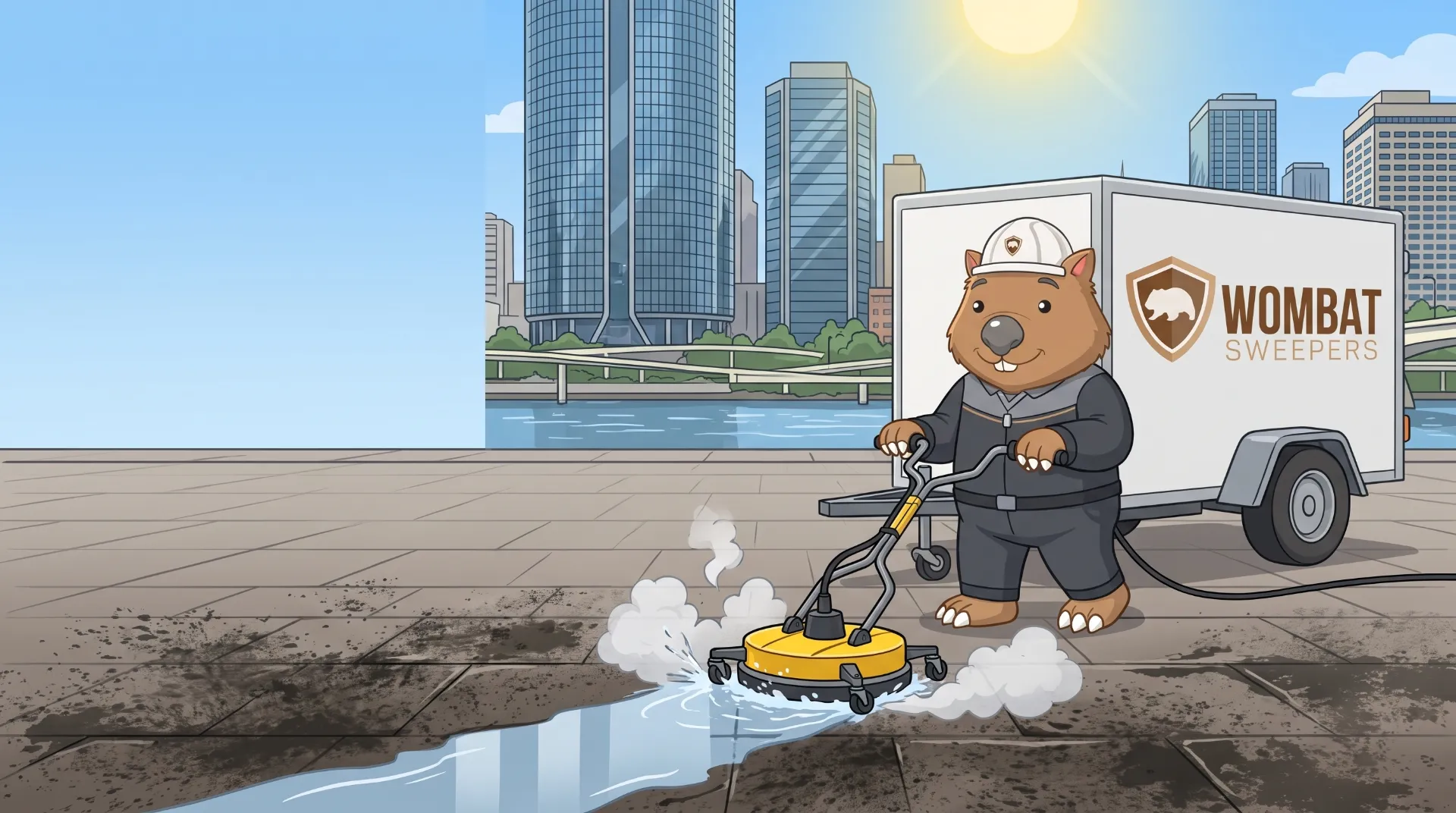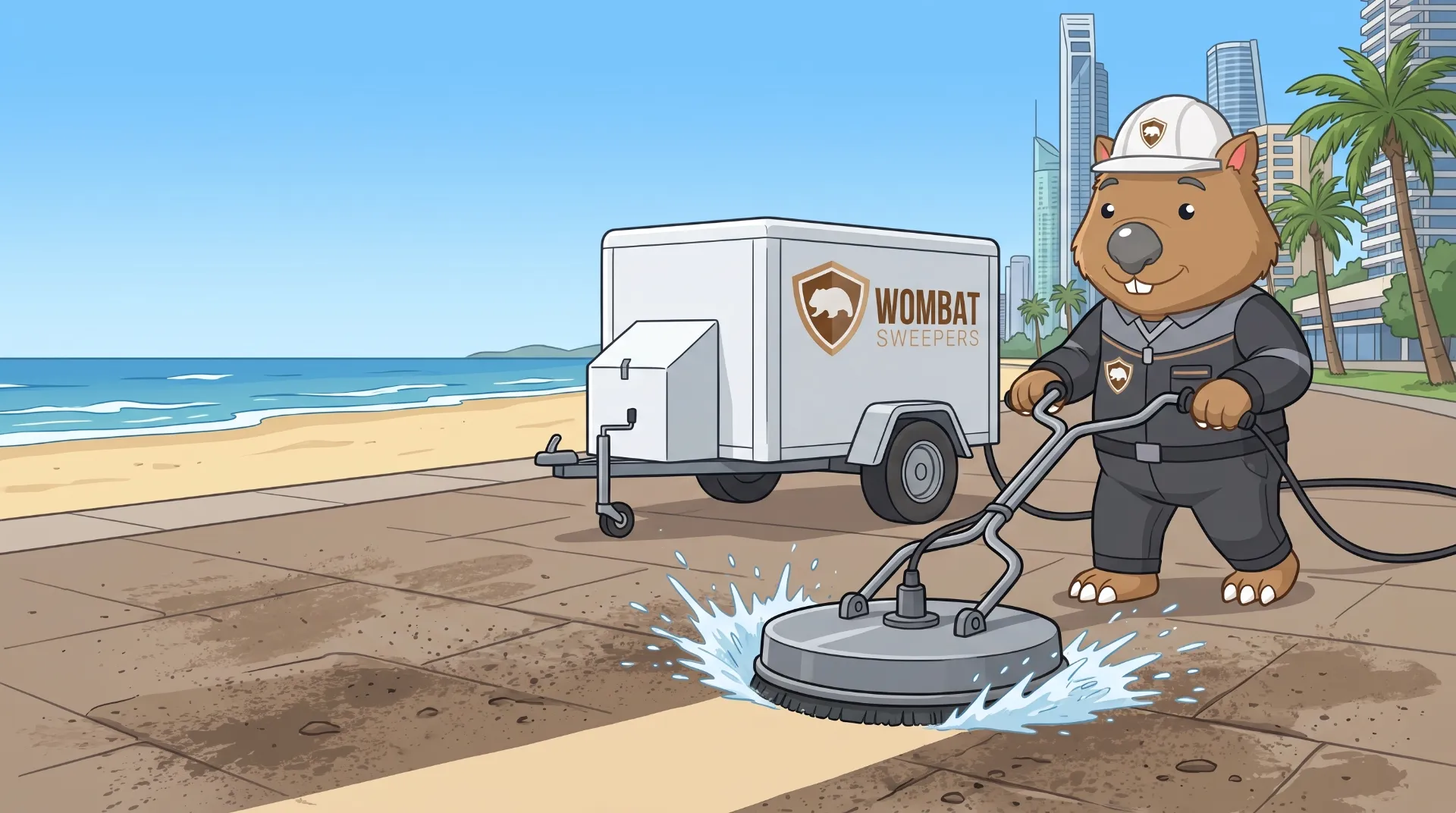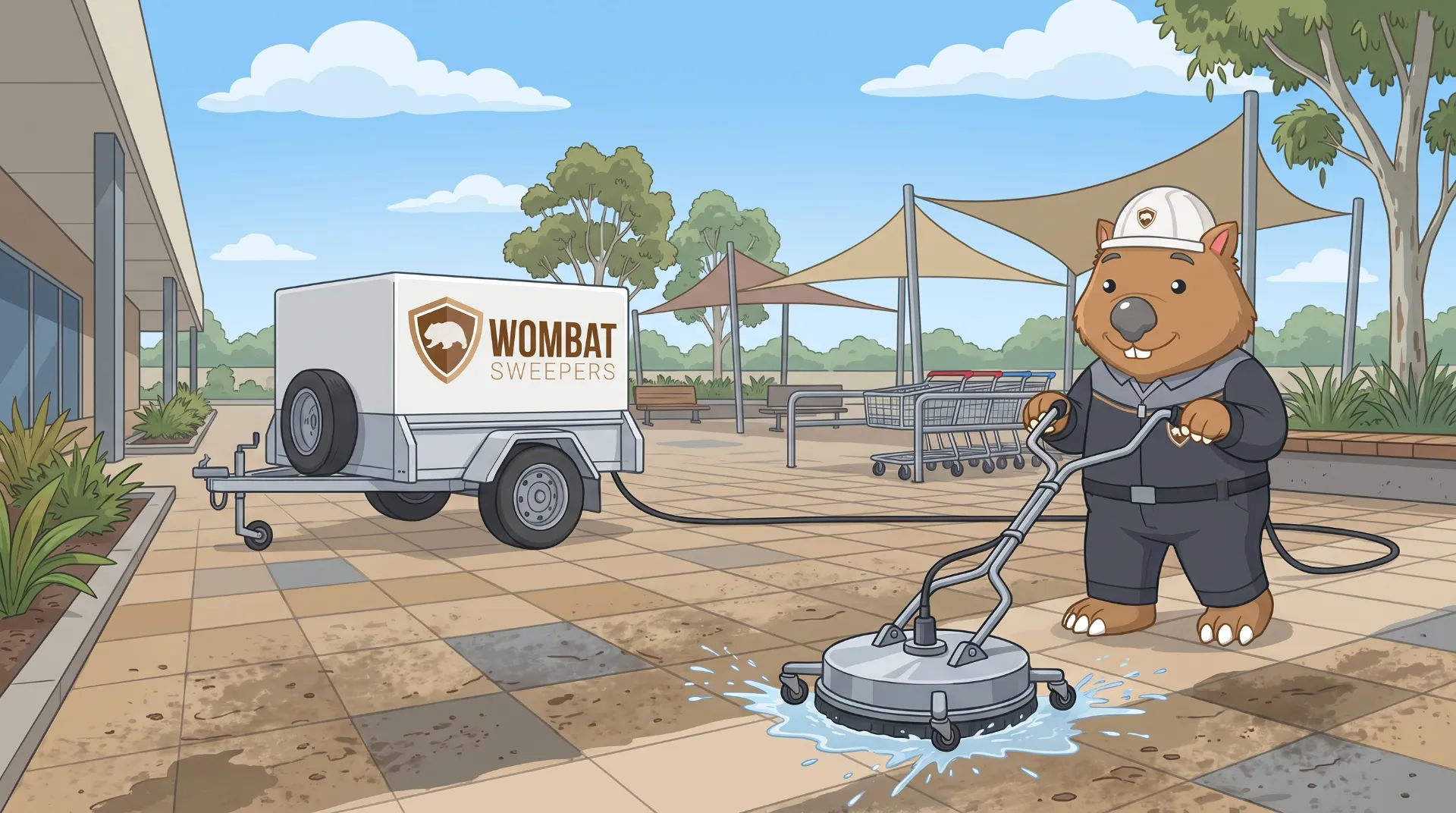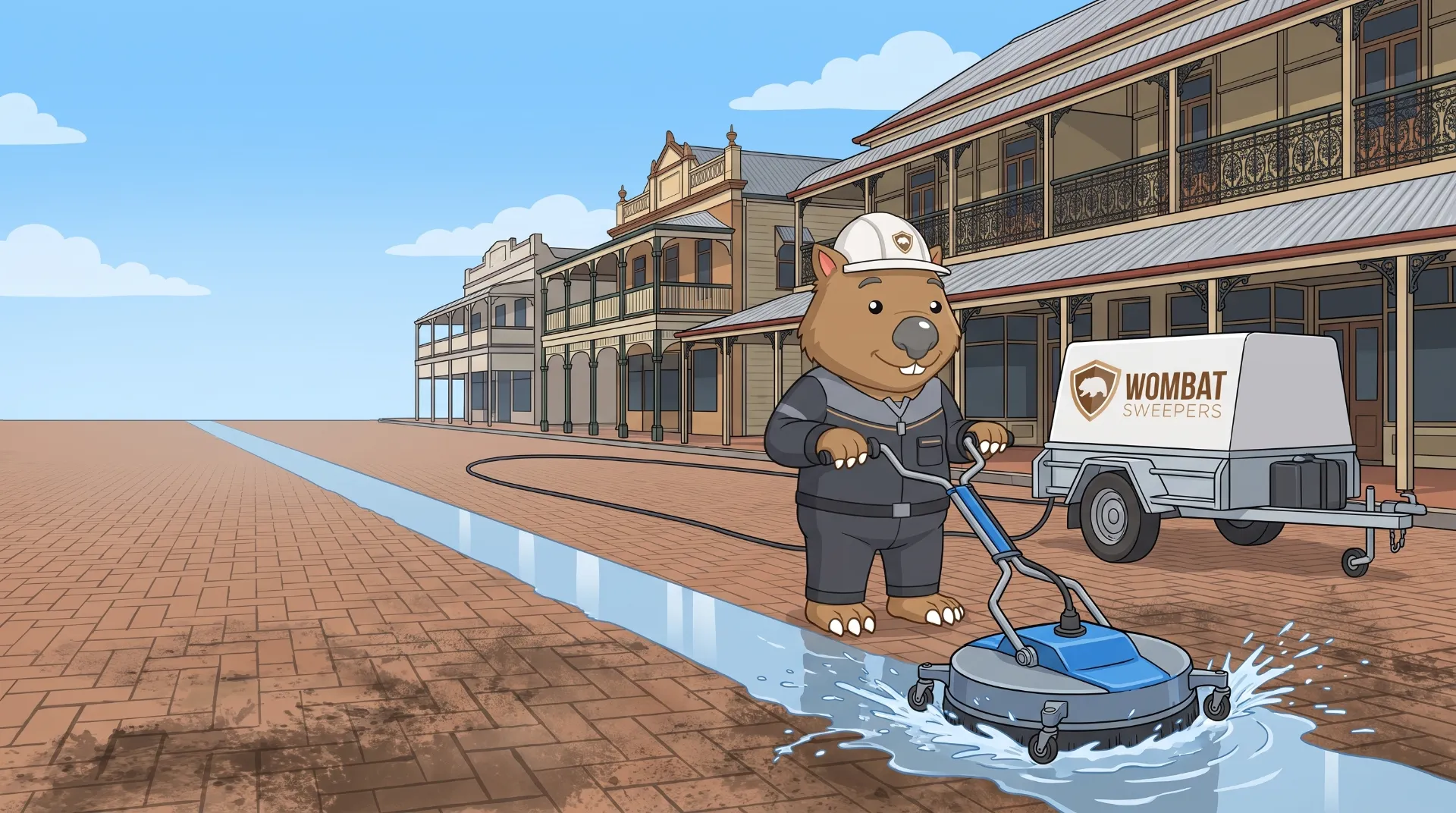
What the service covers
Scope is set at the site walk, so you are quoted for what is actually there rather than a template.
Machines we use
The machine is matched to the surface and the clearance — sending the wrong one wastes everybody’s morning.
Rotary surface cleaners
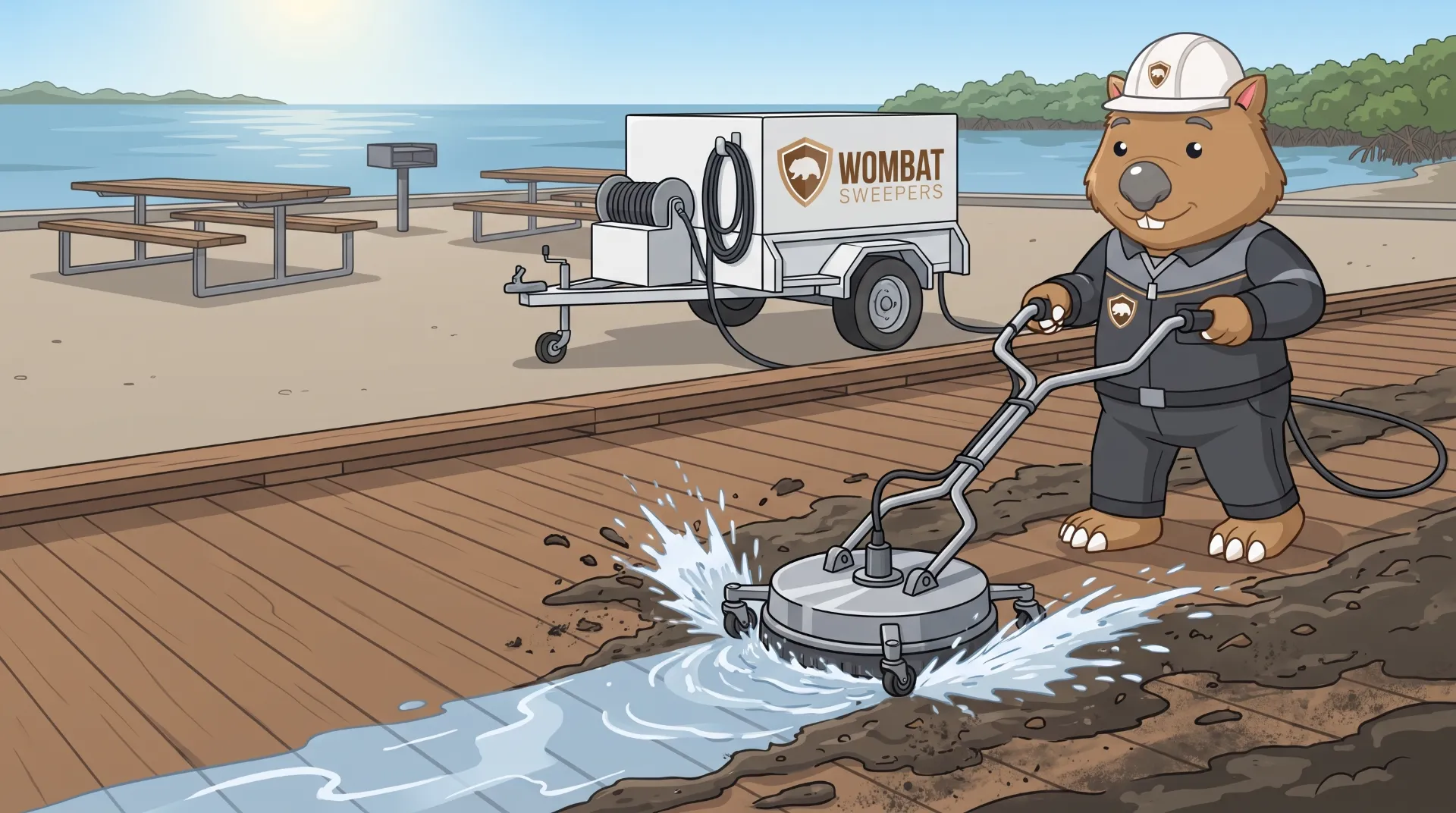
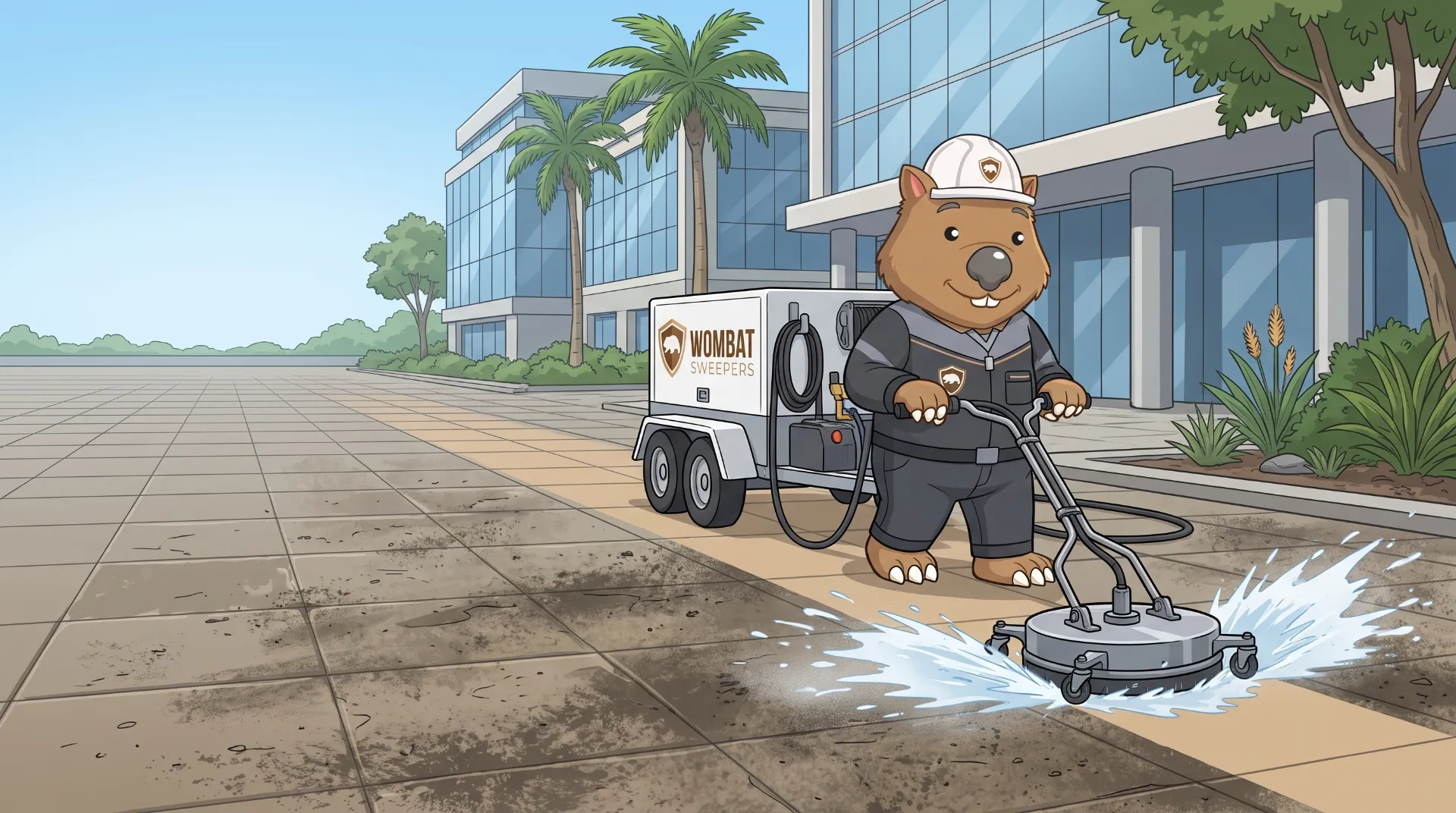
Even coverage on flat concrete with no zebra striping or wand marks.
Hot water and detergent
What actually shifts oil and grease — pressure alone just spreads it.
Handheld lances
Corners, steps, kerbs and detail work around furniture and fittings.
How the job runs
Four steps, every time, whether it is a one-off or a five-year contract.
Surface check
We identify the substrate and its condition first. Old pavers and soft render need a different approach to a new slab.
Contain and protect
Water is directed away from drains where required, and adjacent surfaces protected.
Clean in sections
Worked in overlapping passes so there is no line where we stopped.
Rinse and inspect
Rinsed down and walked with you, so anything that will not come out is identified on the spot.
High pressure cleaning — common questions
Something else? Call 1300 387 713 and talk to someone who runs the machines.
Will pressure cleaning damage my concrete or pavers?
Not if the pressure is matched to the surface. Old pavers, soft render and lightly bonded concrete need less pressure and a surface cleaner rather than a narrow lance — which is exactly where the damage usually comes from.
Can you remove oil stains completely?
We can remove most of it, usually all of the surface staining. Oil that has soaked deep into porous concrete leaves a shadow, and we will tell you before we start rather than after.
Do you handle the waste water?
Where the site or council requires it, yes — water is contained and directed away from stormwater rather than straight into a gully pit.
Is pressure cleaning better than sweeping?
It is not better, it is different. Sweeping is for loose material across a large area; pressure cleaning is for what is stuck to a smaller area. Most sites need both.