Written by Mark Scull, founder of Wombat Sweepers · Published · Last updated
Where the dust comes from
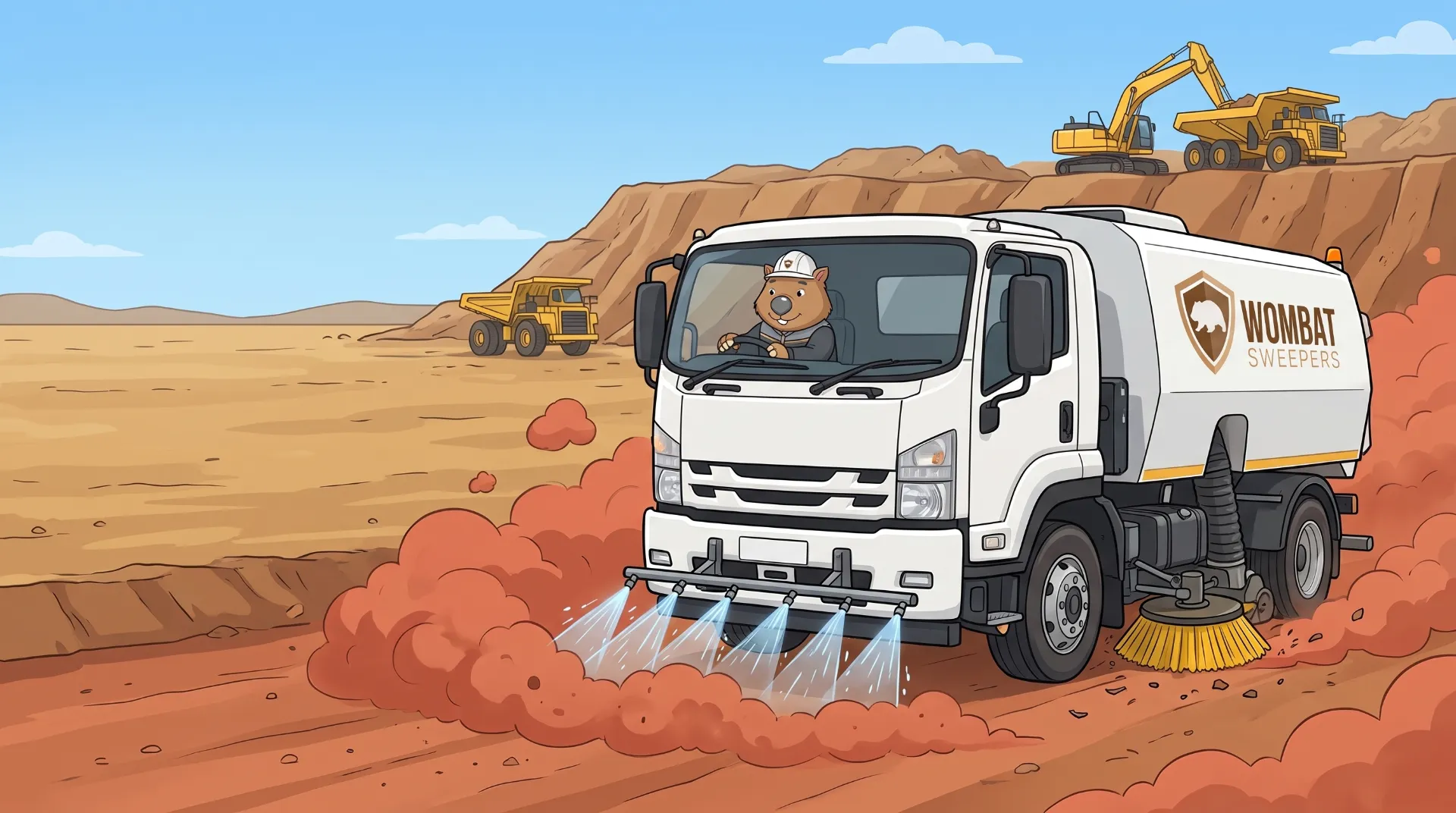
Sweeping is a mechanical process, and mechanical processes lift fine material. A gutter broom spinning at the kerb line, a main broom throwing material toward the collection point, and air moving through the machine all put particles in motion. On a site with crushed rock, concrete dust, cement fines or dry clay, that motion is the problem: the particles are small enough to stay airborne for a long time and travel well beyond the boundary.
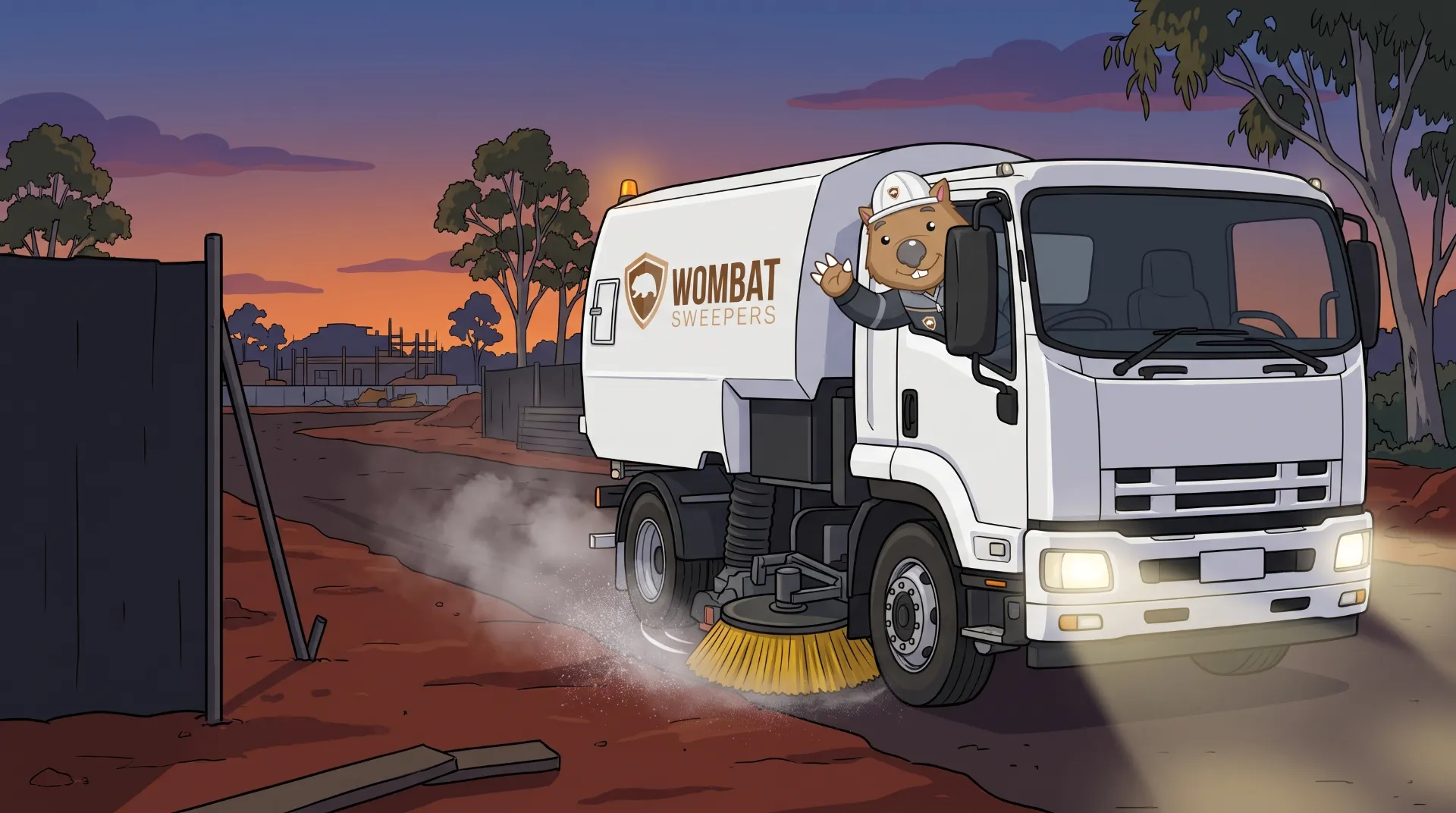
The distinction worth understanding is between visible dust and respirable dust. The plume behind a badly set-up machine is the visible fraction — annoying, and the reason someone photographs it. The finer fraction is the one that matters for health, and it is invisible.
The two control mechanisms
| Mechanism | How it works | Where it matters most |
|---|---|---|
| Water suppression | Spray nozzles wet the surface and the brush heads so fine material stays weighed down rather than becoming airborne | Outdoors on dry, dusty surfaces: construction access, crushed rock, cement fines, dry clay |
| Panel and pocket filtration | Multi-stage filters trap fine particles from the air path before it is exhausted | Everywhere, and the only mechanism available indoors |
| Hopper sealing and load control | A properly sealed hopper stops captured fines escaping during transport and tipping | Long runs, windy sites, sites with neighbours close by |
| Machine selection | Regenerative-air systems recirculate air in a closed loop rather than blowing it out | Fine-sediment work — most Queensland civil and estate roads |
Filters are consumables, not fixtures. Blinded filters are why a machine that controlled dust last month does not this month — which is why filter condition belongs in a maintenance schedule rather than a hope.
How to tell whether dust is being controlled
Four checks, none of which require equipment.
A visible plume trailing the sweeper means suppression is off, water has run out, or filters are blinded.
A fine grey film on bonnets and windscreens after a sweep is the give-away, even if you did not see the plume.
A properly swept surface reads damp-clean. Dusty-clean means the fines were moved, not captured.
On a long dry run, ask where the machine refills. A machine that runs out of water halfway is sweeping dry for the second half.
Dust, neighbours and compliance
On a live construction or industrial site, dust generates two separate problems. The first is a nuisance complaint from a neighbour, a tenant or a passing council officer. The second is a genuine work health and safety exposure for anyone working in it, particularly where the material contains crystalline silica — concrete, brick, mortar and rock.
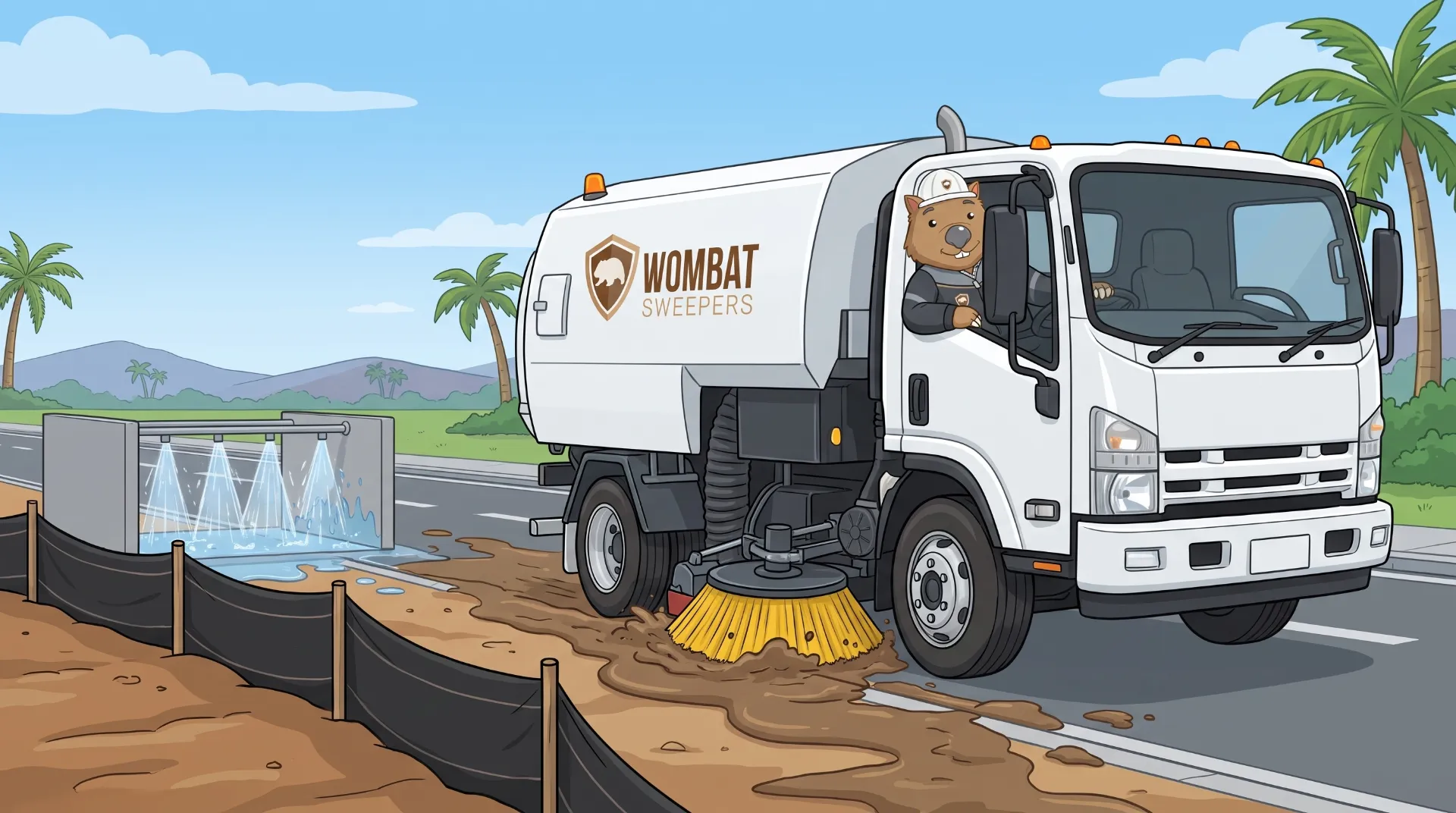
Practically: if your site is producing visible dust at the boundary, treat it as a control failure rather than weather. Sweeping is one of several controls that work together — a stabilised site exit, wheel wash where the mud warrants it, water carts on haul roads, and sweeping of the sealed surfaces beyond the gate. For the specific obligations that attach to your approval, the authoritative sources are your local council’s conditions and the Queensland Government’s environmental guidance at qld.gov.au; for practical sediment and erosion control practice, the International Erosion Control Association Australasia publishes the reference material most consultants work from.
What we run
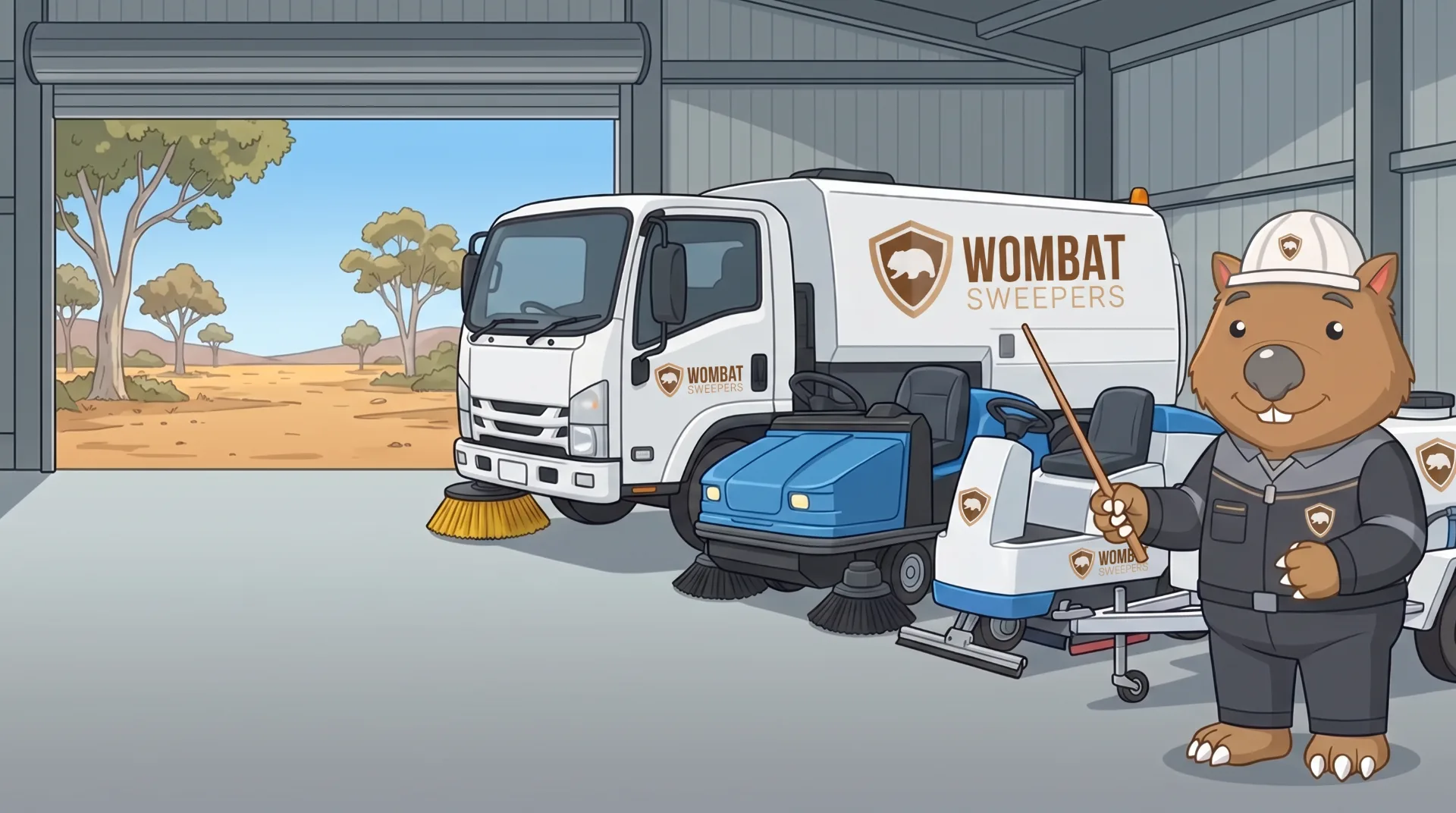
Our sweepers run water-based suppression with panel and pocket filtration, and the road fleet is regenerative-air because most Queensland work is a fine-sediment problem rather than a boulder problem. On indoor and fine-dust work we will recommend an industrial vacuum or a scrubber with water recovery instead of a sweeper, because that is what actually removes the material.
Dust control questions
Something else? Call 1300 387 713 and talk to someone who runs the machines.
How does a sweeper control dust?
Two ways at once: water sprays at the brush heads keep fine material weighed down before it becomes airborne, and panel and pocket filters trap what does get lifted instead of exhausting it. A machine running without either does not remove dust — it relocates it into the air.
Can sweeping make dust worse?
Yes. A dry sweep with no suppression and blinded filters will put a visible plume behind the machine and leave a grey film on parked cars and window sills. That is the single most common cause of neighbour complaints about a sweeping contractor.
Is dust a compliance issue in Queensland?
Airborne dust from a construction or industrial site can be a nuisance and an environmental issue, and it commonly appears in approval conditions alongside sediment controls. Confirm the specific requirement with your local council or the Queensland environmental regulator for your site.
What about dust inside a warehouse?
Indoors, water suppression is limited and filtration does the work. For fine dust in food, pharmaceutical or electronics facilities, an industrial vacuum or a scrubber with recovery is usually the right answer rather than a sweeper alone.