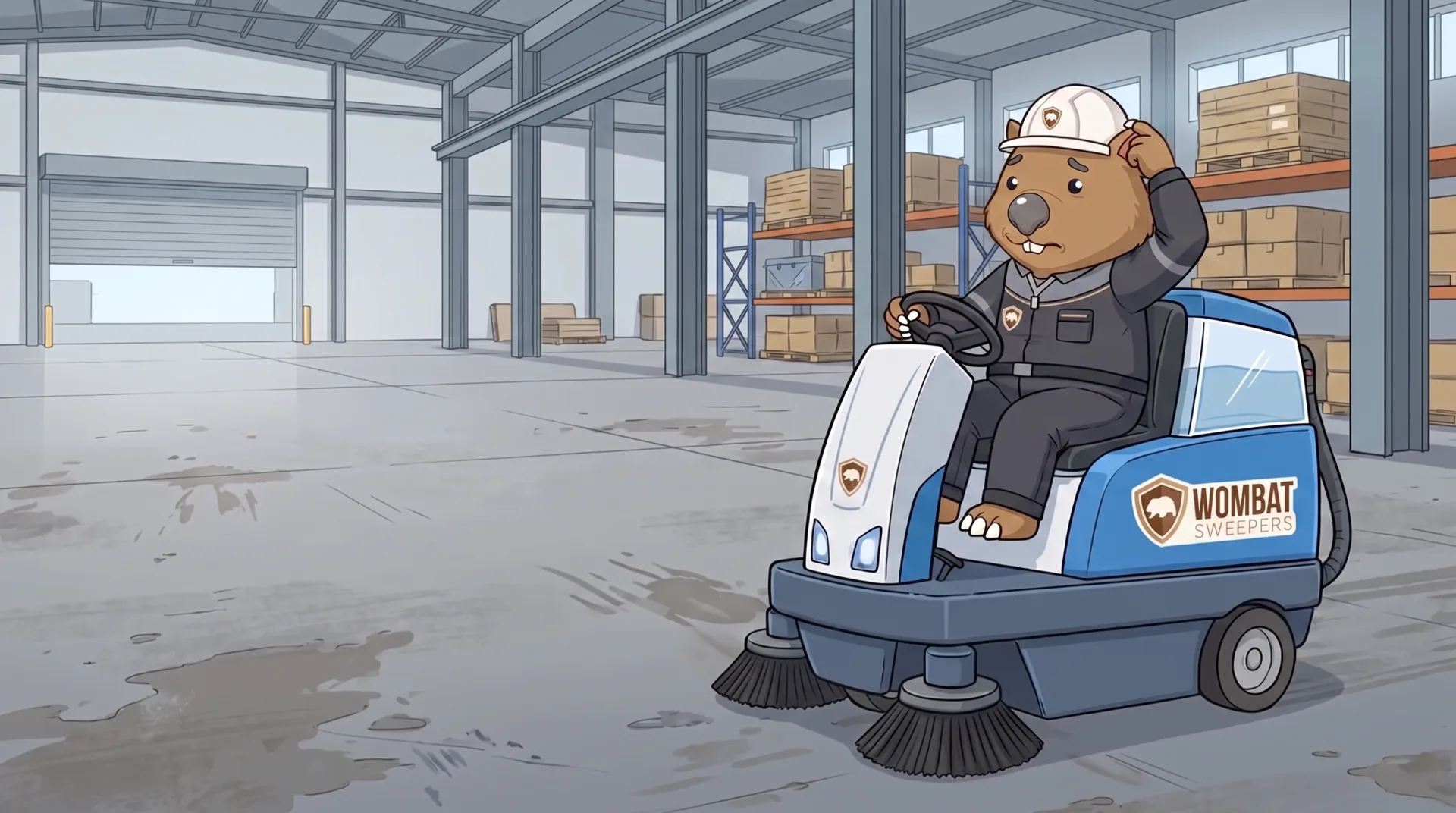
What a sweeper can and cannot do
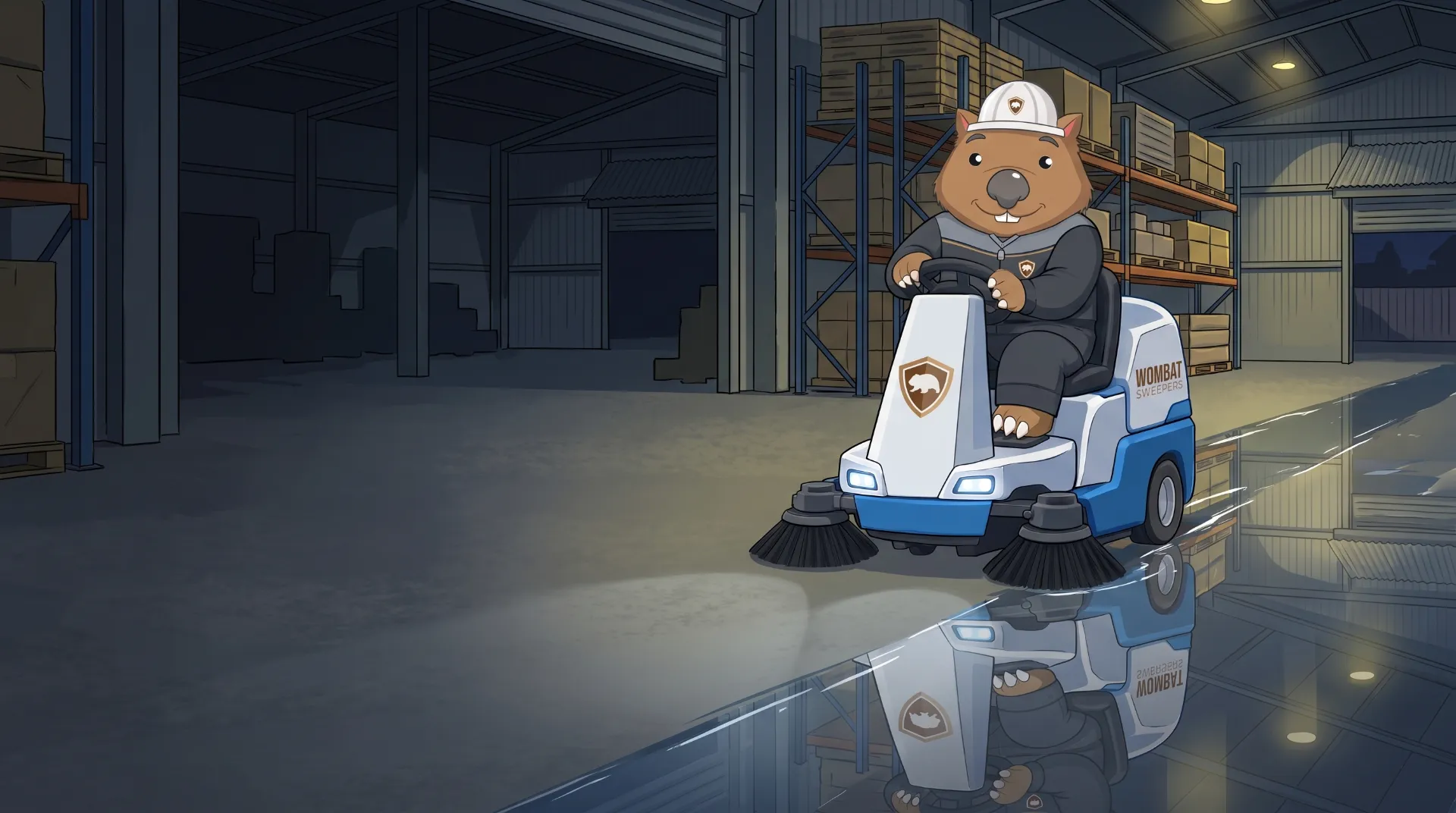
A sweeper lifts material that is sitting loose on the surface into a hopper. It cannot remove anything that is bonded to the concrete. Once dust has been walked and driven into the pores of a slab, no amount of sweeping will bring the colour back — the material is no longer loose.
The grey is three things
Forklift rubber, dust ground into the surface pores, and a thin oil or hydraulic film that binds the other two in place. That combination is why a swept slab can still read as uniformly grey with black bands where the traffic runs.
What actually removes it
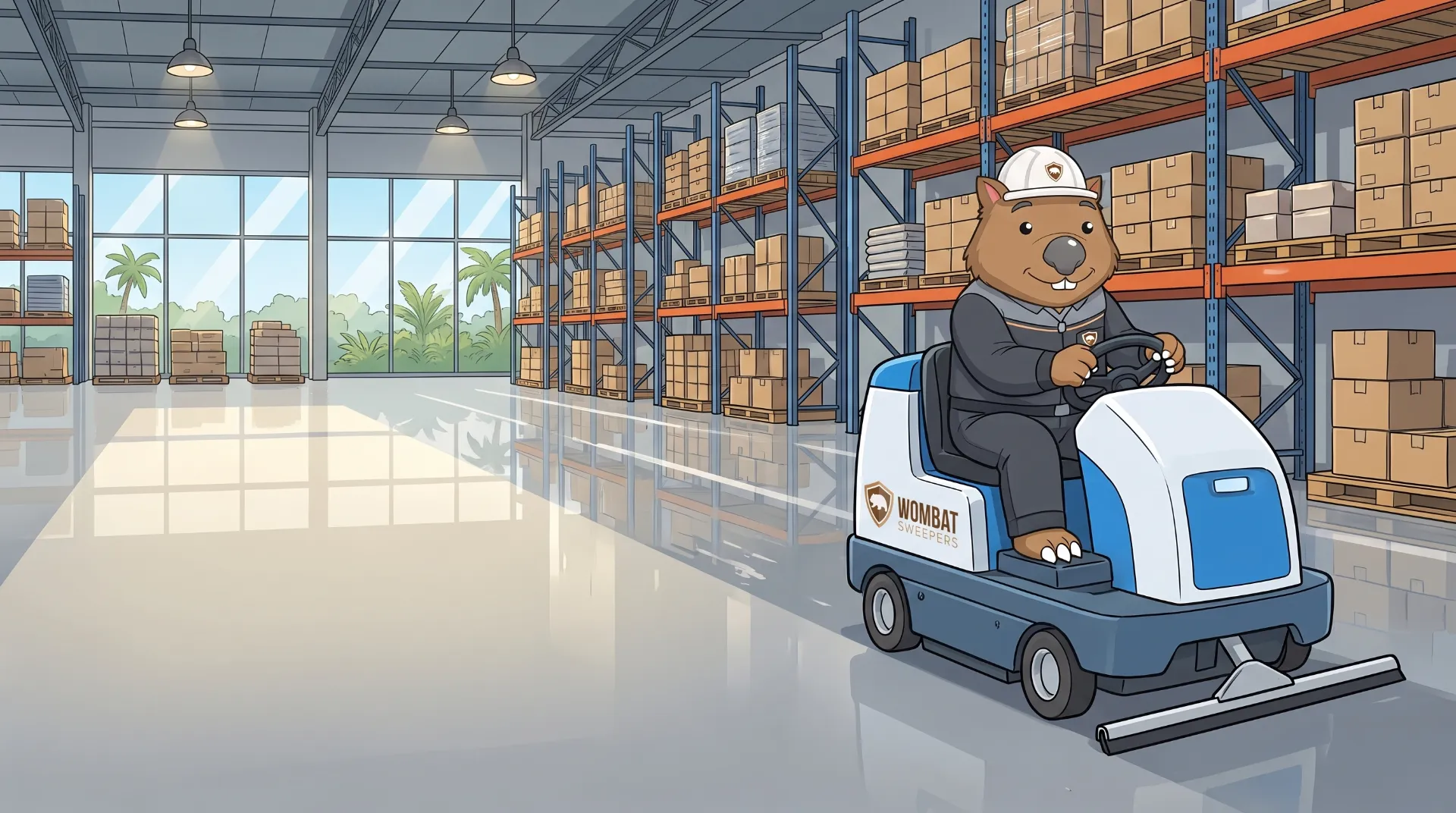
Scrubbing. Water and detergent go down, a rotating pad or brush agitates the surface, and the slurry is vacuumed straight back up. That is a mechanical and chemical process rather than a collection process, and it is the only thing that lifts bonded material out of the concrete.
Sweep first, then scrub
Order matters. Scrubbing over loose grit just turns it into slurry and drags it around the floor. A pre-sweep removes the loose material so the scrubber can work on what is actually stuck.
What to expect, honestly
A first scrub on a neglected slab is dramatic — a test patch will show you. But rubber that has been heat-bonded into old porous concrete for years may not come out entirely, and no contractor who has seen your floor should promise otherwise. After the reset, a maintenance cycle holds it for far less than the first clean cost.
Short answers
Something else? Call 1300 387 713 and talk to someone who runs the machines.
Do we need to stop work to scrub the floor?
Only the section being scrubbed, briefly. The machines recover their own water, so the floor is walkable close behind. Heavy first cleans are best done on a night shift or during a shutdown.
How often should we scrub instead of sweep?
Most warehouses sweep on a weekly or monthly cycle and scrub periodically on top — high-throughput distribution centres often scrub fortnightly.
Will the line marking come back?
Usually yes, and that is often the most visible result. Rubber film over aisle markings and pedestrian walkways is what makes them disappear in the first place.